

What's Happening?
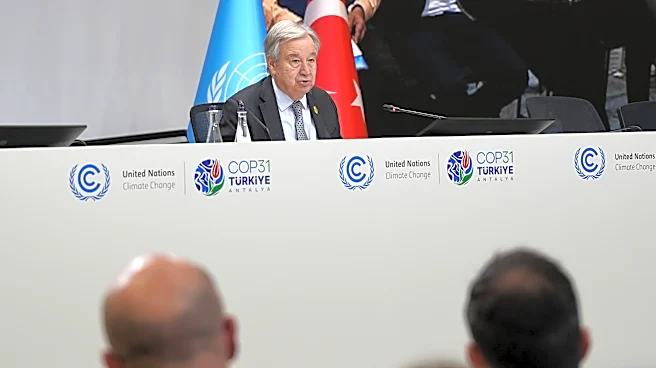
Bolivia's government is in negotiations with Kawari Fund to establish a carbon credit market that directly benefits Indigenous communities involved in forest conservation. These discussions, held during the COP31 climate conference, aim to create a payment
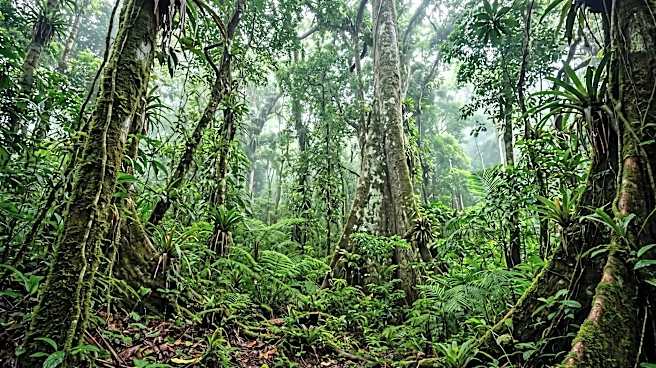
structure that eliminates traditional intermediaries. The goal is to ensure that funds from carbon unit sales directly reach the Charua Yiambae Autonomous Indigenous Territory, which is the pilot region for this program. Oscar Mario Justiniano, Bolivia's Minister of Sustainable Production, Environment, and Water Resources, confirmed the advancement of the country's REDD+ (Reducing Emissions from Deforestation and Forest Degradation) initiative. This specific implementation seeks to forge a direct financial link between carbon credit buyers and local families acting as forest rangers, rather than creating new dependencies on external buyers through opaque middlemen. The project is currently undergoing a mandatory consultation phase to secure consent from local communities before large-scale environmental programming commences. Technical verification of carbon absorption claims will be handled by the Friends of Nature Foundation (FAN) and the International Union for Conservation of Nature (CI) to ensure scientific and legal robustness.
Why It's Important?
This initiative is significant as it aims to create a more equitable and transparent carbon credit market, directly empowering Indigenous communities who are crucial for forest conservation. By removing intermediaries, Bolivia seeks to ensure that the economic benefits of carbon absorption directly translate into household income for local forest rangers. This model could serve as a precedent for other nations looking to implement similar direct payment schemes, potentially increasing the effectiveness of conservation efforts by providing tangible economic incentives to local populations. For international investors, this transparent accounting model, as confirmed by Vanessa Jimenez of Kawari Fund, aligns with their standards, potentially attracting more capital to Bolivia's green economy. The success of this pilot could demonstrate a viable, repeatable investment channel for global capital in environmental conservation, shifting the paradigm of how carbon credits are traded and how their benefits are distributed.
What's Next?
The project is currently in a mandatory consultation phase to secure the consent of local communities, a critical step before large-scale implementation. Following this, the Bolivian government will finalize a regulatory framework designed to exclude intermediaries, ensuring direct payments to the Charua Yiambae community. The technical verification by the Friends of Nature Foundation (FAN) and the International Union for Conservation of Nature (CI) will continue to monitor forest health and verify carbon data, which is essential for corporate buyers to legally record their purchases. If successful, this model could be expanded to other Indigenous territories in Bolivia and potentially influence carbon credit market structures globally. The Kawari Fund aims to showcase this transparent investment channel internationally to attract further capital, suggesting a future where similar direct-to-community models become more prevalent in the green economy.
Beyond the Headlines
This policy move has deeper implications for environmental justice and indigenous rights, as it directly links conservation efforts with the economic well-being of the communities most affected by and involved in protecting natural resources. It challenges the traditional, often criticized, model of carbon credit markets where a significant portion of funds can be absorbed by intermediaries, leaving local communities with minimal benefits. By ensuring direct financial flow, Bolivia is not only promoting forest conservation but also fostering economic self-sufficiency and recognition for indigenous peoples' role as environmental stewards. This could lead to a re-evaluation of global carbon market mechanisms, pushing for greater transparency, equity, and direct community engagement. The initiative also highlights the growing demand from international investors for verifiable and impactful green investments, potentially setting a new standard for corporate social responsibility in environmental finance.