




What's Happening?
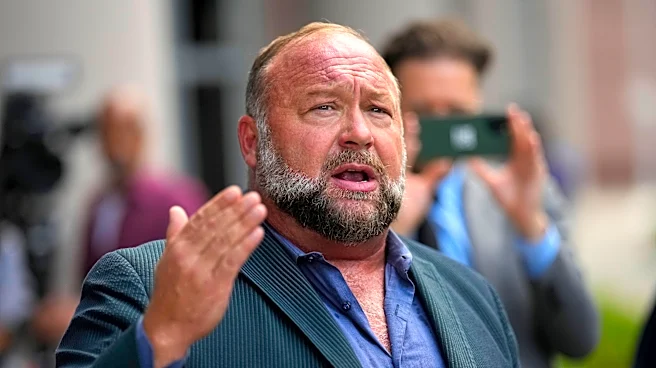
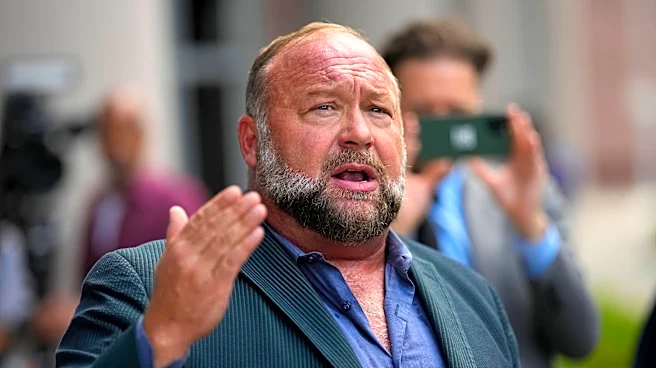
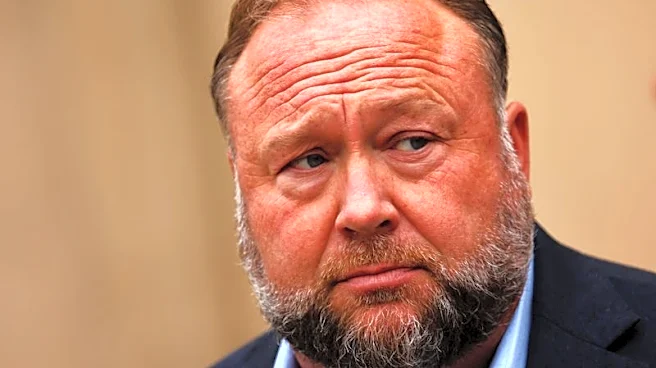
A Texas court has reduced a $50 million judgment against conspiracy theorist Alex Jones, owed to families of the 2012 Sandy Hook Elementary School massacre, to approximately $6 million. The Texas Third Court of Appeals, in a unanimous decision, cited
state laws limiting lawsuit damages as the reason for the reduction. This ruling specifically impacts the judgment awarded to Sandy Hook parents Neil Heslin and Scarlett Lewis, slashing over $45 million in punitive damages down to $1.5 million to comply with the state's $750,000 cap per plaintiff. The court maintained over $4.1 million in compensatory damages. This decision does not affect a separate $1.25 billion judgment against Jones in Connecticut, where he was also found liable for defamation and emotional distress. Jones, who has faced significant financial verdicts leading to bankruptcy, continues to appeal the case, calling the Texas ruling a "gigantic victory for the First Amendment."
Why It's Important?
This ruling highlights the varying legal landscapes and damage caps across U.S. states, which can significantly impact the financial outcomes of defamation lawsuits. While the Texas judgment was substantially reduced, the unaffected $1.25 billion judgment in Connecticut underscores the severe financial consequences Jones still faces for his false claims. The case also brings to the forefront the ongoing legal battles surrounding free speech versus defamation, particularly in the context of conspiracy theories that cause real-world harm. The Sandy Hook families have yet to collect any money from Jones, who has engaged in lengthy appeals. This situation demonstrates the complexities and protracted nature of legal recourse for victims of defamation, even after successful verdicts, and the challenges in enforcing large judgments against individuals who declare bankruptcy.
What's Next?
Alex Jones has stated his intention to continue appealing the case to the state Supreme Court to challenge the remaining damages. He previously attempted to appeal the Connecticut judgment to the U.S. Supreme Court but was denied. The liquidation proceedings of Jones' company, Free Speech Systems, which were stayed during his appeals, are also a critical next step. The satirical website The Onion's proposed licensing deal to take over Infowars' trademarks and intellectual property, aimed at helping pay the defamation judgments, remains on hold due to these ongoing legal processes. The Sandy Hook families' attorney in Texas, Mark Bankston, has dismissed the appeals court ruling as "irrelevant" given the substantial Connecticut judgment, indicating that the focus remains on the larger financial liabilities.
Beyond the Headlines
The case of Alex Jones and the Sandy Hook families delves into profound ethical and legal questions regarding the limits of free speech, particularly when it incites harassment and emotional distress. The legal system's struggle to balance First Amendment protections with the need to hold individuals accountable for harmful misinformation is a central theme. The prolonged legal battles and the difficulty in collecting awarded damages also expose potential vulnerabilities in the justice system for victims seeking redress. Furthermore, the case highlights the societal impact of conspiracy theories, demonstrating how false narratives can lead to real-world suffering and the challenges in combating such disinformation in the digital age. The involvement of a satirical outlet like The Onion in the bankruptcy proceedings also adds a unique cultural dimension, reflecting a broader societal response to the spread of misinformation.