


What's Happening?
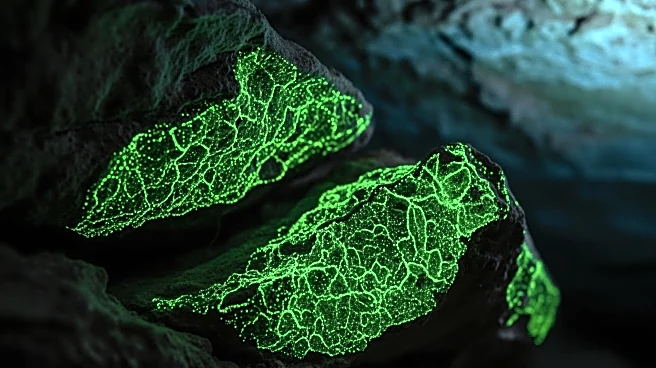
Researchers have discovered bright green microbial colonies in the Carlsbad Caverns of New Mexico, thriving in complete darkness. Led by Hazel Barton and Lars Behrendt, the team found that these microbes photosynthesize using near-infrared light, a phenomenon
previously undocumented. This discovery challenges traditional assumptions about the conditions necessary for life and has significant implications for astrobiology. The microbes' ability to survive in extreme conditions suggests potential parallels with life forms that might exist on other planets, particularly those orbiting red dwarf stars.
Why It's Important?
The discovery of these microbes in a lightless environment expands our understanding of life's adaptability and resilience. It provides a new perspective on the search for extraterrestrial life, suggesting that life could exist in environments previously considered uninhabitable. This research could refine methods for identifying exoplanets capable of supporting life by focusing on the types of light that sustain life in extreme conditions. The findings also highlight the potential for using near-infrared light as an indicator of life, offering a new approach to exploring the universe.
Beyond the Headlines
The implications of this discovery extend beyond astrobiology, offering insights into the fundamental processes of photosynthesis and survival in extreme environments. The research could inform future NASA projects aimed at testing the viability of life in similar conditions on other planets. Additionally, the study underscores the importance of exploring Earth's hidden ecosystems, which may hold clues to understanding life's potential on other worlds. The role of oxygen as a marker for life is also emphasized, as it remains a key indicator in the search for habitable planets.