







What's Happening?
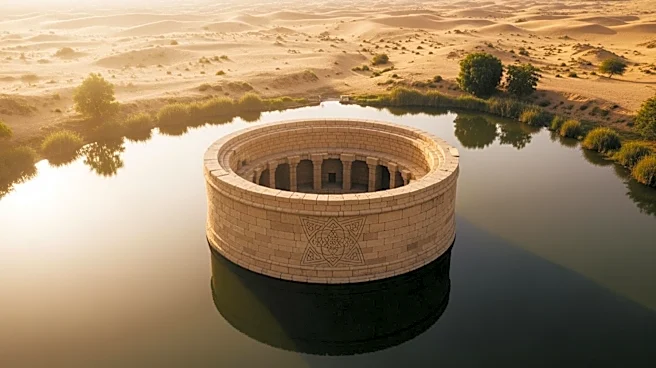
A unique circular water temple has been discovered in northern Sinai, Egypt, by an Egyptian archaeological team. The temple, dating back to the second century, features a large circular basin and is believed to have been connected to the Pelusiac Nile.
The structure's Roman construction is indicated by its brick walls, and it combines ancient Egyptian traditions with Hellenic and Roman styles. Initially thought to be a political structure, further excavations revealed it was a sacred water installation used in religious rituals. The temple is associated with the local god Pelusius, a fertility deity linked to the Nile's natural forces. The discovery provides insights into the cultural interactions between Egypt and the ancient world.
Why It's Important?
The discovery of the circular water temple is significant as it sheds light on the cultural and religious interactions between ancient Egypt and the Hellenic and Roman worlds. The temple's unique architectural design reflects the blending of different cultural influences, highlighting Egypt's role as a cultural crossroads. This finding contributes to the understanding of ancient Egyptian religious practices and the integration of foreign elements into local traditions. The temple's association with the god Pelusius, a deity not commonly found in the Egyptian pantheon, offers new perspectives on the religious landscape of the time. The ongoing research and excavations at the site may uncover further insights into the region's historical significance.