






What's Happening?
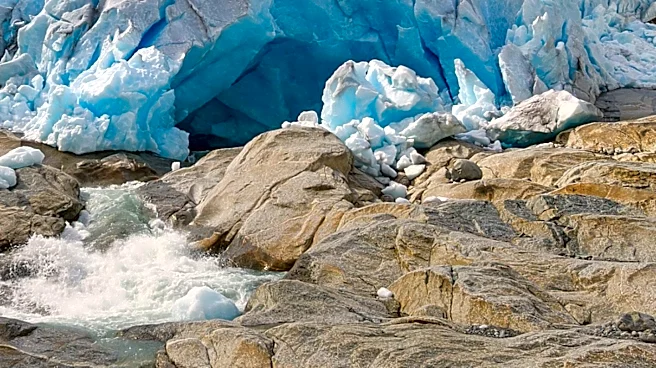
A recent study published in Nature Communications reveals that the melting of glaciers could lead to the formation of over 50,000 new lakes in areas currently covered by ice, including the Arctic, Alaska, and mountainous regions in Asia and the Andes.
This research, conducted by an international team from Sweden, the U.S., Switzerland, and Norway, utilized a three-dimensional ice flow model to map the topography beneath glaciers. The study highlights that these new lakes could significantly increase the risk of flooding, particularly in densely populated regions such as India, Pakistan, Peru, and China. The potential for sudden floods, known as Glacial Lake Outburst Floods (GLOFs), poses a threat to approximately 15 million people worldwide.
Why It's Important?
The findings underscore the broader implications of climate change, particularly the impact of glacial melt on global water resources and disaster risk management. The formation of new lakes could temporarily retain water, potentially mitigating sea level rise, but also pose significant flood risks to vulnerable communities. This research highlights the urgent need for adaptive strategies in regions prone to glacial melt, as well as the importance of international cooperation in addressing the challenges posed by climate change. The study also emphasizes the potential for these new lakes to serve as freshwater reserves, which could be beneficial in water-scarce regions.
What's Next?
The study calls for further research into the potential impacts of these new lakes on local ecosystems and communities. Policymakers and environmental agencies may need to develop strategies to manage the risks associated with glacial lake formation, including monitoring and early warning systems for GLOFs. Additionally, there may be opportunities to harness these new water resources for sustainable development, such as hydroelectric power generation, provided that environmental and social impacts are carefully managed.