








What's Happening?
Thomas Massie, a Republican congressman from Kentucky, has raised concerns about the Pentagon's decision to exclude four soldiers killed in recent hostilities from the official death toll of the Iran war. Massie argues that the Trump administration's
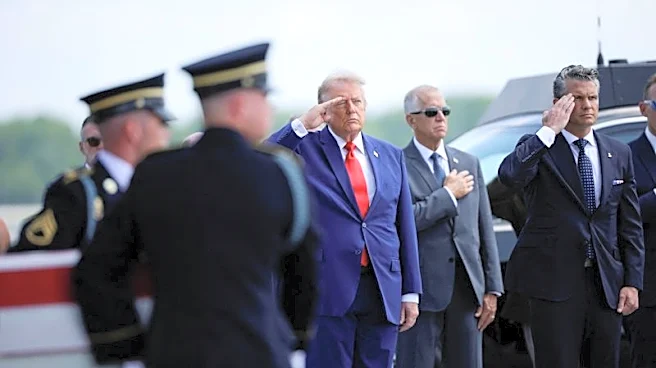
claim that the war ended in June, following a temporary ceasefire with Iran, is a ruse to avoid acknowledging ongoing military actions. He criticized Defense Secretary Pete Hegseth for operating without congressional authorization for over 90 days, which Massie claims is illegal. The Pentagon's list of casualties, which was updated recently, does not reflect the deaths of these soldiers, despite their inclusion in a press release about the transfer of their remains. The Pentagon attributes the discrepancy to temporary data disruptions.
Why It's Important?
The exclusion of recent casualties from the Pentagon's list raises questions about transparency and accountability in military operations. Massie's criticism highlights the ongoing debate over executive power and the need for congressional oversight in military engagements. The situation underscores the complexities of U.S. foreign policy and military strategy, particularly in volatile regions like the Middle East. The handling of casualty reports can impact public perception and trust in government institutions, as well as influence policy decisions and military funding.
What's Next?
The controversy may lead to increased scrutiny of the Pentagon's reporting practices and the Trump administration's military strategies. Congressional hearings or investigations could be initiated to address the legality of military actions without explicit authorization. The situation may also prompt discussions on the broader implications of U.S. involvement in foreign conflicts and the need for clear communication and accountability from government agencies.