



What's Happening?
Youth bureaus and YMCA groups in Westchester County presented innovative solutions for environmental issues affecting the Hudson River and Long Island Sound at the sixth annual Environmental Leaders of Color (ELOC) showcase. Approximately 130 teenagers
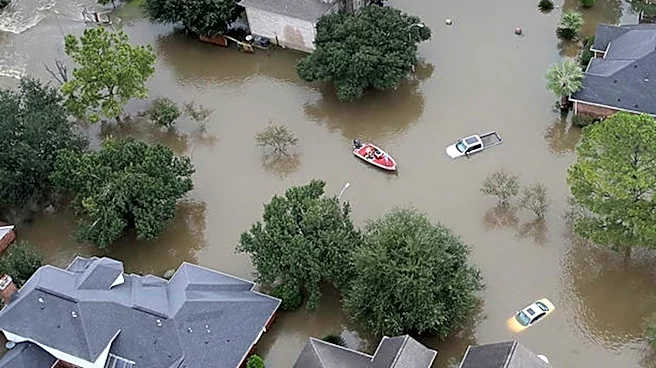
participated in the six-week STEM leadership academy, focusing on 'Invasive Species and Ecology.' The winning team, 'Think Before You Sink' from the Mt. Vernon Youth Bureau, proposed using semi-aquatic plants (bio pods) to absorb waste in the Hudson River and advocated for weekly water quality monitoring by local governments. They highlighted PCBs and combined sewage overflows as major pollution sources, noting that 82% of waste is sewage. The 'Sea Savers' from New Rochelle Youth Bureau/Booker T Washington Vocational Institute suggested a floating solar-powered platform with sensors to monitor water quality in the Long Island Sound, addressing plastic pollution and rising water temperatures. Another New Rochelle team recommended building rain gardens to combat increased flooding due to climate change, while the Peekskill Youth Bureau team proposed permeable pavement to manage floodwater.
Why It's Important?
These youth-led initiatives are important for several reasons. Firstly, they highlight the critical environmental challenges facing major U.S. waterways like the Hudson River and Long Island Sound, which are vital ecosystems and economic resources for the region. The proposed solutions, such as bio pods and permeable pavement, offer practical and potentially scalable approaches to pollution control and flood mitigation. Secondly, the involvement of youth in developing these solutions fosters a new generation of environmental stewards and innovators, crucial for long-term sustainability efforts. Their direct engagement with local issues, like the impact of pollution on beaches and aquatic life, underscores the immediate and tangible effects of environmental degradation on communities. The projects also demonstrate the potential for local governments and community organizations to collaborate on environmental protection, with teams planning to present their models to city councils, potentially influencing local policy and infrastructure development.
What's Next?
The teams, particularly the 'Think Before You Sink' and 'Paving the Way for Peekskill with Permeable Pavement' groups, plan to present their models and recommendations to local government bodies, such as the Peekskill City Council. This could lead to further consideration and potential implementation of their proposed solutions, including increased water quality monitoring and the adoption of permeable pavement in urban planning. The 'Sea Savers' team members have already joined the 'Save The Sound' group to participate in beach cleanups, indicating continued direct action. The ELOC program's success in engaging youth suggests that similar initiatives will continue, fostering ongoing environmental education and advocacy. The focus on specific local issues, like the Hudson River's PCB contamination and sewage overflows, means that future efforts will likely continue to target these persistent problems with innovative, community-driven approaches.
Beyond the Headlines
Beyond the immediate environmental benefits, these youth initiatives carry significant social and educational implications. The ELOC program, by engaging approximately 130 teenagers in a six-week STEM leadership academy, is cultivating critical thinking, problem-solving skills, and a sense of civic responsibility among young people. This hands-on approach to environmental science and engineering not only educates them about complex ecological issues but also empowers them to become active participants in addressing these challenges. The emphasis on 'Environmental Leaders of Color' also highlights the importance of diverse perspectives in environmental advocacy, ensuring that solutions are inclusive and address the needs of all communities. Furthermore, the projects underscore the interconnectedness of environmental health with public health and quality of life, as seen in concerns about dirty beaches and flood damage to homes. This holistic view can inspire broader community engagement and policy changes that prioritize environmental justice and sustainable urban development.