





What's Happening?
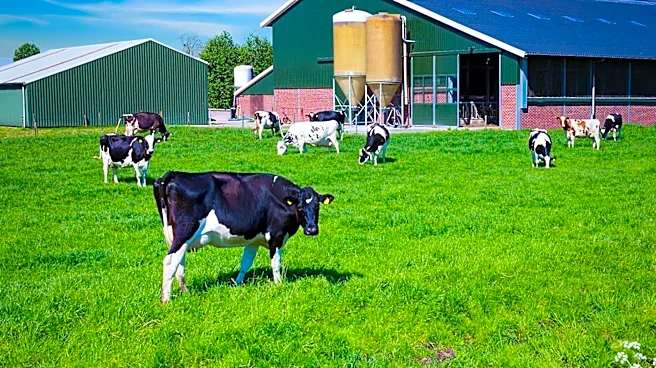
President Trump announced his intention to empower farmers and ranchers to process their own meat, aiming to challenge the dominance of the 'Big Four' packing firms. In a statement on Truth Social, President Trump expressed concern over what he described
as a "nasty Monopoly" controlled by these large processors, many of which have foreign ownership. He stated that he is authorizing legal documents to be drawn up to grant farmers and ranchers the right to process their own food, anticipating a swift implementation of this change. Currently, federal law permits farmers to slaughter livestock for personal consumption, but selling meat processed outside federally inspected facilities, especially across state lines, faces significant regulatory hurdles. This initiative comes amidst recent backlash from beef producers regarding President Trump's proclamation to temporarily suspend tariffs on imported beef.
Why It's Important?
This initiative could significantly impact the U.S. agricultural and meat processing industries. By enabling farmers and ranchers to process their own meat for sale, it could introduce more competition into a market currently dominated by four major companies: Tyson, Cargill, JBS, and National Beef Packing. This could potentially lead to fairer prices for producers, increased consumer choice, and a more resilient food supply chain. Small and independent processors, who have received approximately $1 billion in USDA funding since 2021 to expand their operations, stand to gain from loosened regulations. However, the proposal raises questions about food safety and regulatory oversight, as meat sold commercially typically requires federal inspection. The 'Big Four' packers, two of which are owned by Brazilian companies, could face increased competition and potential market share erosion.
What's Next?
The next step involves the drafting and implementation of legal documents to facilitate President Trump's proposal. This will likely entail navigating complex regulatory frameworks concerning meat processing, inspection, and interstate commerce. The Justice Department's ongoing investigation into potential antitrust violations in cattle and beef markets may also influence the direction and scope of these changes. Stakeholders, including farmers' associations, consumer advocacy groups, and the 'Big Four' packers, are expected to react to these developments, potentially leading to lobbying efforts and legal challenges. The outcome will determine the extent to which farmers and ranchers can expand their processing capabilities and whether the market concentration in the meat industry will genuinely be disrupted.
Beyond the Headlines
President Trump's proposal touches upon deeper issues of economic concentration, national food security, and the balance between regulation and free markets. The perceived monopoly of the 'Big Four' packers has been a long-standing concern for many in the agricultural sector, raising questions about fair compensation for producers and the vulnerability of the food supply chain to disruptions. By advocating for localized processing, the initiative could foster a more decentralized and resilient food system, potentially reducing reliance on large-scale industrial operations. However, ensuring food safety and quality standards in a more fragmented processing landscape will be a critical challenge. This move also highlights the broader political debate surrounding antitrust enforcement and the role of government in regulating powerful industries.