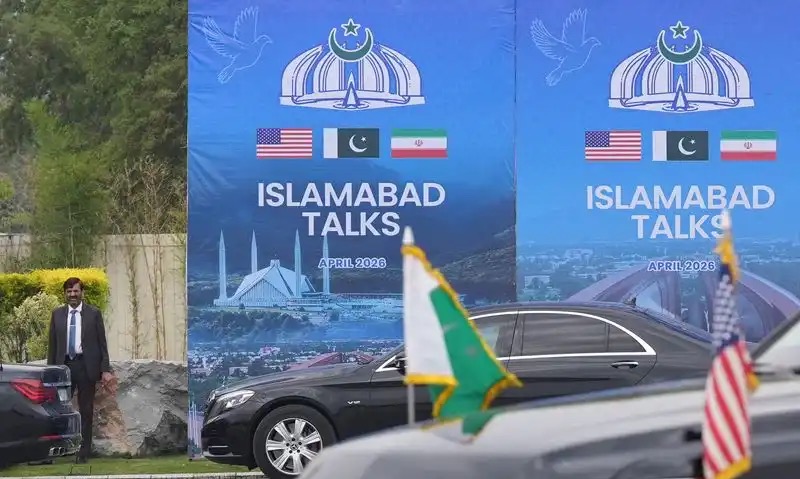









What's Happening?
The United States and Iran concluded talks in Islamabad without reaching an agreement, with both sides blaming each other for the failure. The U.S. delegation, led by Vice President JD Vance, emphasized the need for Iran to abandon its nuclear program,
while Iran accused the U.S. of excessive demands. The discussions also addressed control over the Strait of Hormuz, a strategic waterway critical for global oil transport. Despite a temporary ceasefire, tensions remain high, with both nations holding firm on their positions.
Why It's Important?
The breakdown of talks highlights the persistent challenges in resolving U.S.-Iran tensions, particularly regarding nuclear proliferation and regional security. The Strait of Hormuz's strategic importance means that any disruption could have significant implications for global oil markets and economic stability. The failure to reach an agreement may lead to increased military confrontations and further destabilize the region. The situation also reflects broader geopolitical dynamics, with potential impacts on international relations and security policies.
What's Next?
With no agreement in place, the U.S. and Iran may explore alternative diplomatic or military options to address their concerns. The international community will likely continue to monitor the situation, as any escalation could have far-reaching consequences. Future negotiations may require new approaches or mediators to bridge the gap between the two nations. The ongoing tensions may also influence U.S. foreign policy and its relations with allies in the region.