
What's Happening?
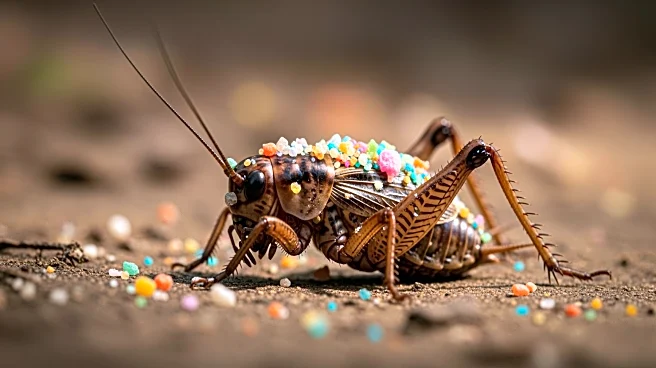
A recent study published by the American Chemical Society in Environmental Science & Technology has revealed that house crickets are consuming polyethylene microplastics. The research involved offering
crickets a choice between plastic-contaminated and uncontaminated food. Initially, the crickets showed no preference, but over time, they consumed more of the plastic-laden food. The study found that crickets could only ingest particles smaller than their mouth size, and once a particle was small enough, they continued to consume it throughout their life. Interestingly, the ingestion of microplastics did not hinder the crickets' growth, as they increased in size by 25 times, and their mouth size also enlarged. However, the digestion process in crickets led to the breakdown of microplastics into even smaller particles known as nanoplastics, which could pose additional environmental risks.
Why It's Important?
The study's findings are significant as they highlight the potential environmental impact of microplastics. While crickets themselves do not seem to suffer negative effects from ingesting microplastics, the breakdown of these plastics into nanoplastics could have broader ecological consequences. Nanoplastics are more easily consumed by other organisms and can spread further into the environment, potentially affecting a wider range of species. This research underscores the growing concern about microplastics and their impact on ecosystems, as well as the need for continued efforts to mitigate plastic pollution. The study also raises awareness about the challenges faced by generalist insects that cannot distinguish between food and microplastics, which could lead to unintended ecological disruptions.
What's Next?
Efforts to address microplastic pollution are ongoing, with some regions implementing bans on single-use plastic bottles and bags. Organizations are working to reduce plastic waste and promote alternatives to traditional plastics. Continued research is essential to understand the full extent of microplastics' impact on the environment and to develop effective strategies for mitigating their presence. Public awareness and individual actions, such as reducing plastic use and recycling responsibly, are also crucial components of addressing this issue. The study's findings may prompt further investigations into the role of insects in the breakdown and spread of microplastics, potentially influencing future environmental policies and conservation efforts.