



What's Happening?
The global shift towards clean transportation is seeing varied adoption rates, with electric motorcycles and battery-powered ships emerging as significant players in certain regions. In parts of Africa, such as Kenya, Rwanda, Uganda, and Nigeria, electric motorcycles are
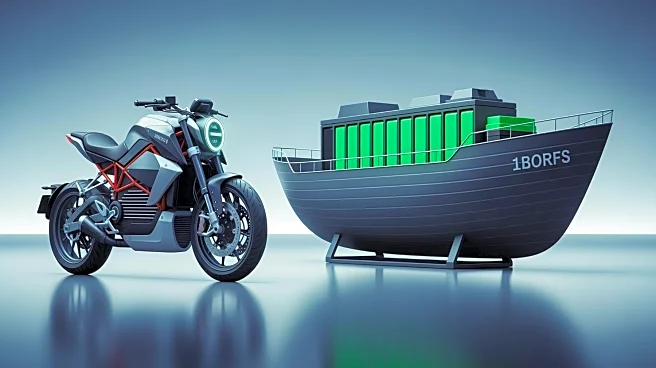
becoming the first electric vehicles to achieve meaningful scale. These motorcycles, supported by battery-swapping networks, are replacing gasoline-powered bikes, which are prevalent in urban transport. The economic benefits include lower fuel costs and reduced maintenance, with some operators integrating solar-powered charging stations. Meanwhile, on China's Yangtze River, fully battery-electric container ships are operating commercially, using containerized batteries that are swapped and charged onshore. These developments illustrate a shift towards electrification in transport, driven by economic and operational efficiencies.
Why It's Important?
The adoption of electric motorcycles and battery-powered ships represents a significant step towards reducing carbon emissions in the transportation sector. In Africa, the transition to electric motorcycles can lead to substantial reductions in urban air pollution and operational costs, benefiting both the environment and local economies. Similarly, the use of battery-powered ships on China's Yangtze River challenges the traditional reliance on diesel engines, offering a cleaner alternative for inland shipping. These innovations highlight the potential for electrification to transform transportation, particularly in regions where infrastructure and economic conditions align with the benefits of electric vehicles. The broader implication is a move towards sustainable transport solutions that can be replicated in other parts of the world.
What's Next?
As these technologies continue to prove their viability, further expansion and adoption are likely. In Africa, the success of electric motorcycles could encourage more investment in battery-swapping infrastructure and solar charging stations, potentially leading to wider adoption across the continent. In China, the success of battery-powered ships on the Yangtze River may inspire similar initiatives in other inland waterways, promoting cleaner shipping practices. These developments could also influence global transport policies, encouraging other countries to explore similar electrification strategies. The continued evolution of these technologies will depend on regulatory support, investment in infrastructure, and the ability to scale operations effectively.
Beyond the Headlines
The shift towards electric motorcycles and battery-powered ships also raises questions about the future of traditional fuel industries and the potential for job displacement. As electric vehicles become more prevalent, there may be a decline in demand for gasoline and diesel, impacting industries reliant on fossil fuels. Additionally, the transition to electric transport could require new skills and training for workers, presenting both challenges and opportunities for workforce development. The environmental benefits of reduced emissions must be balanced with considerations for economic and social impacts, ensuring that the transition to clean transport is equitable and inclusive.