






What's Happening?
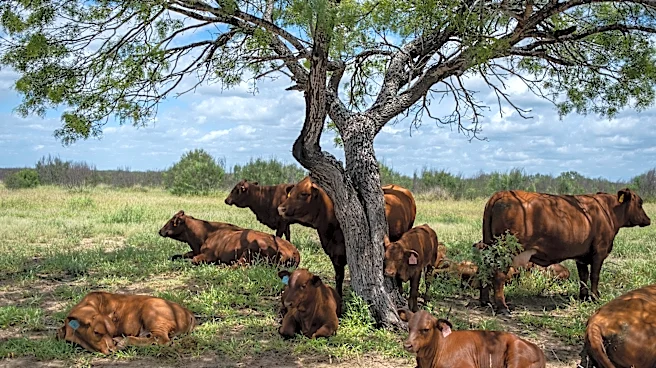
The United States is experiencing a rise in screwworm cases, with twelve confirmed infections in animals across Texas and New Mexico. The outbreak, which began with a case in a calf in South Texas on June 3, has now spread to include cattle, goats, sheep,
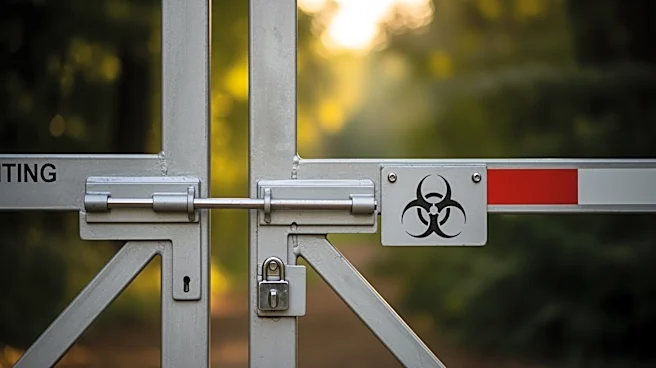
and a dog. The screwworm, a fly larva that infests open wounds, was largely eradicated in the U.S. in the 1970s but has re-emerged, raising concerns among agricultural experts. The U.S. Department of Agriculture (USDA) has reported that 11 of the 12 cases remain active. In response, Texas Agriculture Commissioner Sid Miller has called for the use of the Screwworm Adult Suppression System (Swass) to combat the outbreak. Additionally, Pennsylvania has issued a precautionary quarantine order to prevent the spread of the parasite into the state.
Why It's Important?
The resurgence of screwworm poses a significant threat to the Texas beef industry, which is already dealing with high beef prices. The parasite's ability to spread rapidly could lead to severe economic consequences for livestock producers. The USDA's efforts to release sterile flies aim to control the population of fertile screwworms, but the situation requires immediate attention to prevent further spread. The precautionary measures taken by Pennsylvania highlight the potential for the outbreak to affect other states, emphasizing the need for coordinated biosecurity efforts. The situation underscores the importance of maintaining vigilance against agricultural pests that can have widespread economic impacts.
What's Next?
The USDA and state officials are likely to continue monitoring the situation closely, with potential expansions of the Swass program if the outbreak persists. Livestock owners in affected areas are urged to report any signs of screwworm infection to help contain the spread. The success of the sterile fly release program will be critical in determining the next steps in managing the outbreak. Other states may follow Pennsylvania's lead in implementing precautionary measures to protect their agricultural sectors.