



What's Happening?
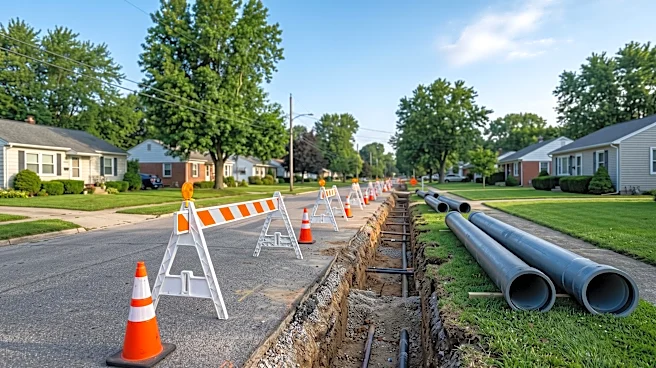
Work is set to begin on Tuesday to investigate and relocate human remains discovered during construction near the North Dakota governor’s residence. Construction of a fence and driveway was halted in May after crews unearthed human remains and coffin
fragments. Subsequent ground-penetrating radar surveys have identified up to 29 potential anomalies that require further analysis. These anomalies could indicate additional human remains or other objects like tree roots or utility lines. The Office of Management and Budget (OMB), in coordination with the State Historical Society of North Dakota, has contracted an archaeologist for the investigation and a funeral home for the relocation of any remains to Bismarck cemeteries. The Crisis Care Chaplaincy has volunteered its services to ensure respectful handling of the exhumed remains. The site was known to be one of Bismarck’s oldest cemeteries, dating back to the late 1800s.
Why It's Important?
This discovery highlights the complex intersection of historical preservation, urban development, and ethical considerations. The presence of an old cemetery at the site of the governor's residence underscores the need for thorough archaeological assessments before commencing construction on historically sensitive lands. The incident raises questions about the adequacy of prior historical research and due diligence, particularly given that burial sites were reportedly found in the area during earlier construction projects in 1903 and 1959. The cost of the archaeological work, an additional $155,000, adds to the original $2.35 million allocated for security upgrades, demonstrating the financial implications of unforeseen historical discoveries. This situation serves as a critical reminder for public entities to conduct comprehensive historical and archaeological surveys to prevent disturbances of burial grounds and ensure respectful treatment of human remains.
What's Next?
The archaeological investigation will proceed with the goal of identifying the gender and approximate age of any discovered remains, though DNA testing will not be conducted. The findings will determine the final cost of the project and the extent of the relocation efforts. The Office of Management and Budget will likely face scrutiny regarding its initial planning and the historical assessments conducted before the construction began. This incident may prompt a review of protocols for construction projects on historically significant sites across the state, potentially leading to more stringent requirements for archaeological surveys and public engagement. Local historians and community members will likely continue to monitor the process, advocating for the respectful handling and proper reinterment of any remains found, ensuring that the historical significance of the site is acknowledged and preserved.
Beyond the Headlines
The discovery of human remains near the North Dakota governor's residence delves into the deeper cultural and ethical dimensions of land use and historical memory. It brings to light the often-overlooked histories embedded within urban landscapes, particularly those of early settlers and communities. The incident prompts reflection on how modern development intersects with ancestral lands and burial sites, raising questions about the responsibility of contemporary society to its past. The involvement of the Crisis Care Chaplaincy underscores the spiritual and emotional significance of such discoveries, emphasizing the need for reverence and care in handling human remains. This event could foster a broader public discourse on the importance of archaeological preservation, the ethical treatment of historical sites, and the integration of historical knowledge into urban planning to prevent similar occurrences and ensure that the legacies of past generations are honored.