







What's Happening?
The ongoing conflict between the U.S. and Iran has led to significant disruptions in maritime trade through the Strait of Hormuz, a critical oil passage. As a result, vessels are increasingly seeking alternative routes, with African ports gaining prominence
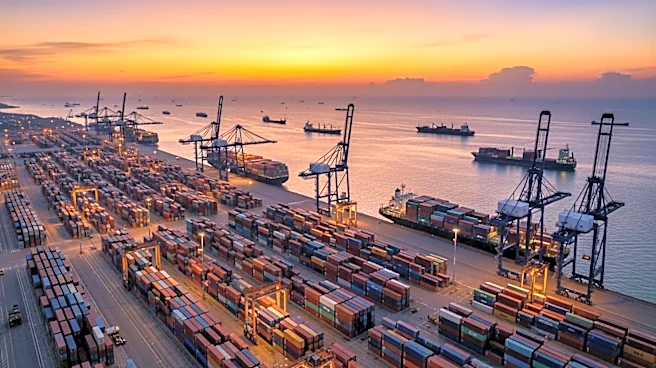
as safer and more predictable options. Mauritius, in particular, has emerged as a key refueling hub, with a 42% increase in bunker calls at Port Louis Harbor in March. Similarly, Namibia's Port of Walvis Bay has seen a surge in ship-to-ship bunkering activities. Togo's Port of Lomé is also positioning itself as a strategic alternative for global shipping lines, offering deep-water capabilities and a strategic location along the Gulf of Guinea. Despite a fragile ceasefire between the U.S. and Iran, traffic through the Strait of Hormuz remains low, with many ships either stuck or proceeding cautiously due to security concerns.
Why It's Important?
The shift in maritime trade routes underscores the broader geopolitical and economic impacts of the U.S.-Iran conflict. The increased reliance on African ports highlights their growing strategic importance in global trade networks. This development could lead to economic benefits for African nations, boosting their port revenues and enhancing their roles in international logistics. However, it also reflects the ongoing volatility in the Middle East, which continues to pose risks to global energy markets. The Strait of Hormuz accounts for about 20% of the world's oil shipments, and any prolonged disruption could have significant implications for global oil prices and supply chains.
What's Next?
As the situation in the Middle East evolves, shipping companies and global trade stakeholders will continue to monitor the security and operational conditions in the Strait of Hormuz. African ports may see further increases in traffic if tensions persist, potentially leading to infrastructure investments and expansions to accommodate the growing demand. Additionally, diplomatic efforts may intensify to stabilize the region and ensure the safe passage of vessels through the Strait. The international community, including major oil-importing nations, will likely play a role in seeking resolutions to mitigate the impact on global trade and energy markets.