
What's Happening?
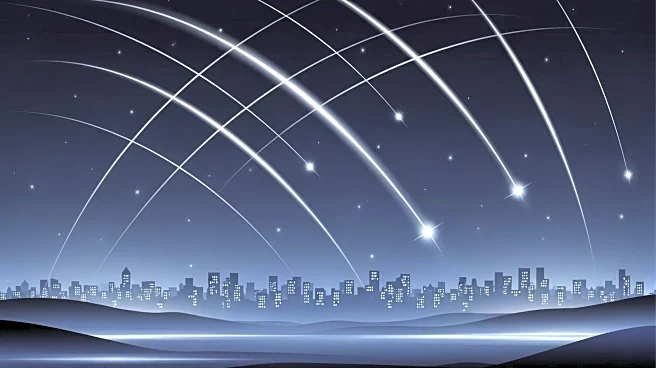
The Geminid meteor shower provided a stunning celestial display over the San Francisco Bay Area on the night of December 13. Footage captured by Shreenivasan Manievannan from Lick Observatory showcased
both timelapse and real-time views of meteors streaking across the sky. This annual meteor shower occurs as Earth passes through the debris trail of asteroid 3200 Phaethon. According to Space.com, the Geminids were expected to peak on the nights of December 13 and 14, with the potential for up to 150 meteors per hour under optimal viewing conditions, as reported by the American Meteor Society.
Why It's Important?
The Geminid meteor shower is one of the most reliable and spectacular meteor showers of the year, offering a unique opportunity for both amateur and professional astronomers to observe and study meteoric activity. This event not only captivates the public's imagination but also provides valuable data for scientists studying the composition and behavior of meteoroids. The visibility of such celestial events can also boost local tourism and interest in astronomy, drawing enthusiasts to observatories and dark-sky locations for optimal viewing experiences.
What's Next?
As the Geminid meteor shower concludes, astronomers and skywatchers will look forward to the next major meteor shower, the Quadrantids, which typically peaks in early January. Observatories and astronomy clubs may organize viewing events and educational programs to engage the public and promote interest in upcoming celestial phenomena. Additionally, researchers will continue to analyze data collected during the Geminids to enhance understanding of meteoroid streams and their impact on Earth's atmosphere.