





What's Happening?
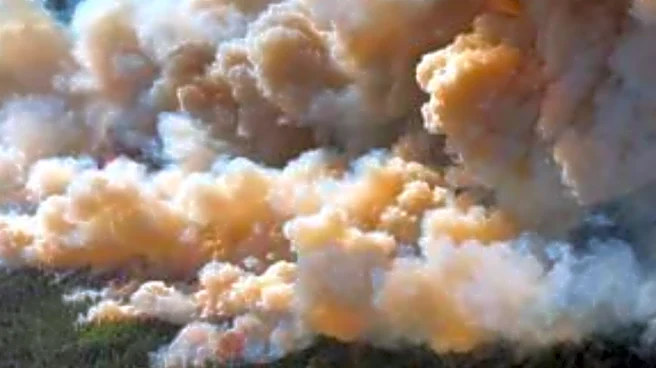
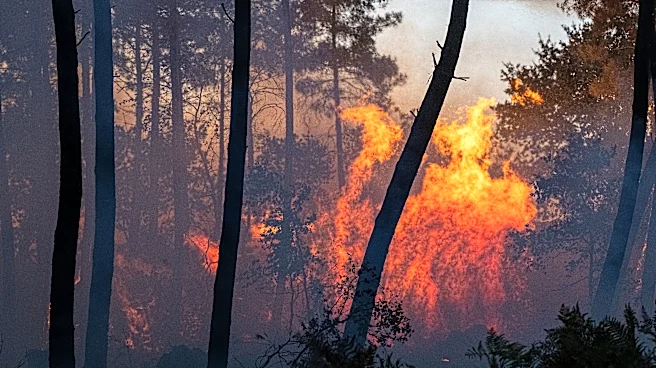
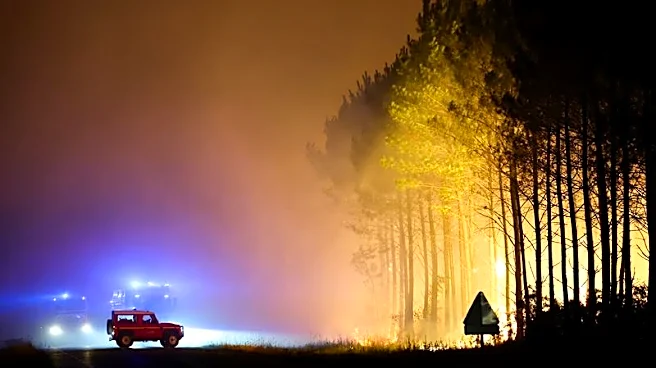
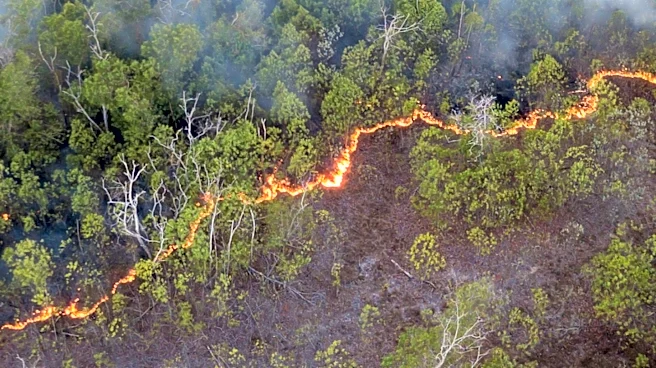
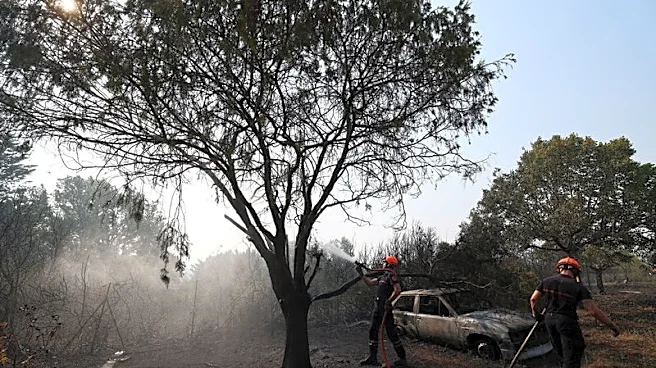
Spain has declared a national emergency due to wildfires for the first time, as intense heatwaves fuel destructive fires across southern Europe. The emergency was declared following multiple uncontrolled fires around Madrid and in Ávila province, leading
to the evacuation of over 10,000 residents. This measure allows Spain's interior ministry to coordinate firefighting operations nationwide. In France, authorities have ordered the evacuation of the Cap Ferret peninsula, affecting around 40,000 people. The fires have been exacerbated by high temperatures, with some areas in Spain expected to reach 44°C. The European Forest Fire Information Service reports that more than 350 fires have burned in Spain this year, destroying over 1,300 square kilometers, a significant increase from the previous year.
Why It's Important?
The declaration of a national emergency in Spain highlights the growing threat of wildfires exacerbated by climate change. The situation underscores the urgent need for coordinated international efforts to address climate-related challenges. The fires have significant implications for public safety, economic stability, and environmental conservation. The evacuations disrupt local economies, particularly in tourist areas like Cap Ferret. The increasing frequency and intensity of wildfires in Europe reflect broader global climate trends, emphasizing the need for comprehensive climate policies and adaptation strategies. The situation also stresses the importance of international cooperation in disaster response and resource sharing, as seen in France's request for EU assistance.
What's Next?
As temperatures continue to rise, further evacuations and emergency measures may be necessary. The Spanish government is likely to enhance its firefighting capabilities and may seek additional international support. The situation could prompt European nations to accelerate climate action plans and invest in sustainable infrastructure to mitigate future risks. Political leaders may face increased pressure to address climate change more aggressively, potentially leading to new policy initiatives. The ongoing crisis could also influence public opinion, increasing support for environmental policies and international climate agreements.