




What's Happening?
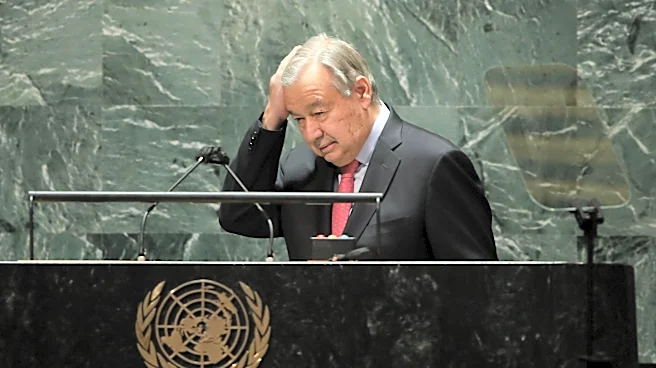
United Nations Secretary-General António Guterres has appointed Samer Abdeljaber of Jordan as the new United Nations Resident Coordinator in Yemen, a role he commenced on November 1. Abdeljaber will also serve as the Humanitarian Coordinator for Yemen.
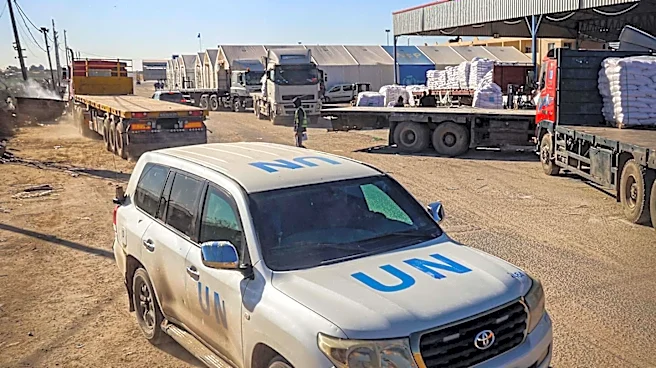
His appointment follows a distinguished career spanning over two decades in humanitarian action and emergency response. Notably, from October 2023 to February 2024, Abdeljaber served as the Emergency Coordinator for the Gaza response, leading the World Food Programme's (WFP) emergency operations during a particularly complex period. In this capacity, he also acted as Resident Coordinator/Humanitarian Coordinator ad interim multiple times and was instrumental in leading UN negotiations to facilitate humanitarian access into Gaza. Prior to this, he was the WFP Representative and Country Director in Palestine from 2021 to 2024, managing operations in a highly challenging political and humanitarian environment. His extensive experience includes leadership roles in Libya, Jordan, Iraq, Sudan, and Egypt, focusing on strengthening national systems and humanitarian coordination.
Why It's Important?
Abdeljaber's appointment to a critical role in Yemen, a country also facing a severe humanitarian crisis, underscores the UN's commitment to deploying experienced leadership in complex global emergencies. His recent direct involvement in coordinating humanitarian access and operations in Gaza highlights the ongoing challenges and the critical need for skilled negotiators and logisticians in conflict zones. His experience in leading UN negotiations for humanitarian access in Gaza is particularly significant, as it reflects the intricate diplomatic and operational hurdles faced by aid organizations in delivering essential assistance to affected populations. This background suggests that his leadership in Yemen will likely prioritize effective coordination and access, drawing on lessons learned from other challenging environments. The UN's choice of a seasoned professional like Abdeljaber signals an intent to enhance the efficiency and reach of humanitarian efforts in Yemen, potentially impacting millions in need.
What's Next?
As Mr. Abdeljaber assumes his new role in Yemen, his immediate focus will likely be on assessing the current humanitarian landscape, strengthening coordination among various UN agencies and partners, and engaging with local authorities to improve aid delivery. Given his proven track record in facilitating humanitarian access in challenging contexts like Gaza, it is anticipated that he will prioritize negotiations to ensure unhindered movement of aid and personnel within Yemen. His leadership will be crucial in addressing the multifaceted crises in Yemen, including food insecurity, displacement, and health emergencies. The international community will be watching to see how his experience from Gaza and other regions translates into tangible improvements in humanitarian outcomes for the Yemeni population. Furthermore, his appointment may signal a broader UN strategy to leverage cross-regional expertise in tackling persistent humanitarian challenges.
Beyond the Headlines
The appointment of a figure with direct experience in the Gaza response to lead humanitarian efforts in Yemen highlights a broader trend within international aid: the increasing need for adaptable and resilient leadership capable of navigating highly politicized and volatile environments. Abdeljaber's role in leading negotiations for humanitarian access in Gaza points to the evolving nature of humanitarian work, where diplomatic skill is as crucial as logistical expertise. This situation underscores the systemic challenges faced by humanitarian organizations globally, where access is often contingent on complex political negotiations rather than purely operational capabilities. His transition from Gaza to Yemen also implicitly acknowledges the interconnectedness of global humanitarian crises and the transferability of strategies for addressing them, emphasizing the importance of shared learning and best practices across different conflict zones. This move could also influence future UN appointments, favoring candidates with proven negotiation skills in high-stakes humanitarian contexts.