


What's Happening?
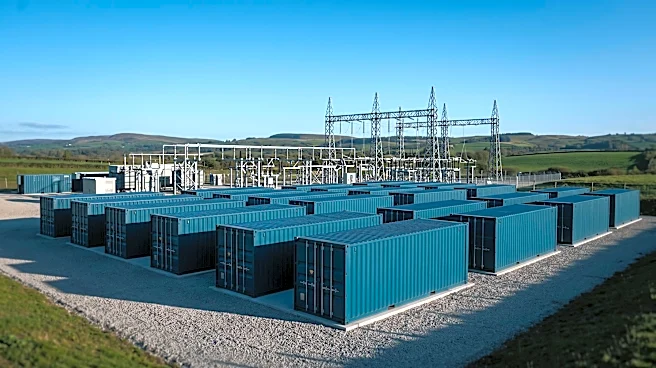
Maryland regulators have denied financial credits for the Oystercatcher Energy Storage System, a 500-megawatt battery storage project proposed near BGE's Conastone substation in White Hall, Harford County. The Public Service Commission (PSC) cited concerns
regarding the project's cost-effectiveness and its potential benefits to ratepayers as reasons for the denial. Harford County has actively opposed the project, forming a workgroup of county agencies, fire companies, health officials, and community organizations to examine battery energy storage proposals and explore legal action due to environmental and public safety concerns. Despite the denial of financial credits, the PSC's decision does not halt the project's separate approval process, and developers could reapply for credits after January 1.
Why It's Important?
This decision highlights the complex balance between advancing renewable energy infrastructure and addressing local community concerns regarding safety and environmental impact. While battery storage projects are crucial for supporting Maryland's electric grid and integrating more renewable energy sources, the denial of financial credits indicates a regulatory emphasis on economic viability and ratepayer benefit. Harford County's strong opposition underscores growing public scrutiny of large-scale energy projects, particularly those involving lithium-ion batteries, due to potential fire risks and environmental consequences. The PSC's call for continued engagement with local stakeholders reflects a recognition of the importance of community input in such developments, potentially influencing future energy project approvals across the state.
What's Next?
The Oystercatcher Energy Storage System developers can continue pursuing the project's separate approval processes despite the denial of financial credits. They also have the option to reapply for Energy Storage Capacity Credits after January 1. Regulators have emphasized the need for ongoing engagement with local stakeholders in Harford County if the project proceeds, suggesting that community concerns will remain a significant factor. Harford County is likely to continue its opposition, potentially through legal avenues or further participation in regulatory proceedings. The outcome of this project could set a precedent for how similar battery storage initiatives are evaluated and approved in Maryland, particularly concerning financial incentives and local community acceptance.
Beyond the Headlines
The controversy surrounding the Oystercatcher project reflects a broader national debate on the siting and regulation of energy storage facilities. As the U.S. transitions to a more renewable energy-dependent grid, the deployment of large-scale battery storage becomes increasingly critical. However, public apprehension regarding safety, environmental impact, and property values often creates significant hurdles. This case underscores the need for robust regulatory frameworks that not only assess the technical and economic feasibility of such projects but also effectively address community concerns through transparent engagement and comprehensive risk assessments. The balance between energy innovation and local environmental justice will continue to be a defining challenge in the nation's energy policy.