




What's Happening?
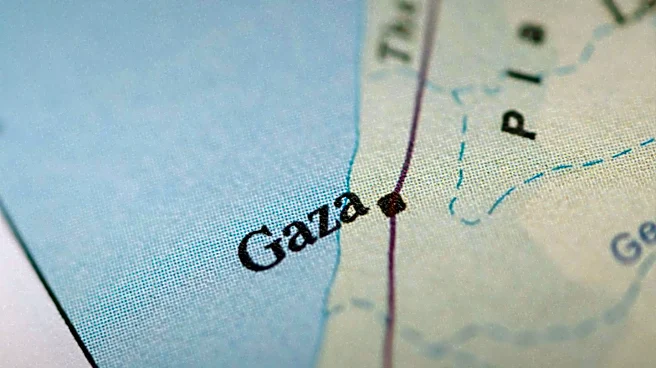
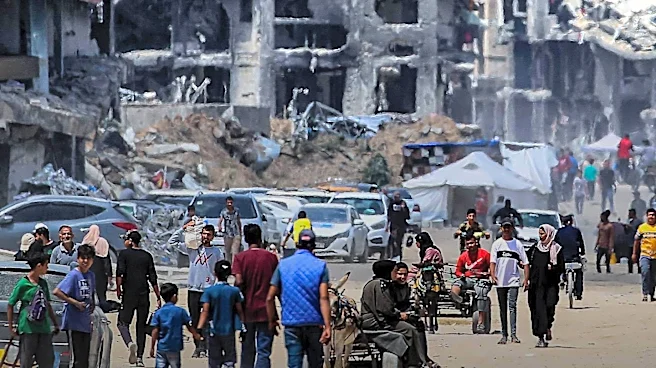
The Gaza Strip's economy has undergone a dramatic transformation, shifting from a formal structure to a shadow economy operating outside legal and institutional frameworks. This change is a direct consequence of the ongoing conflict, which has systematically
destroyed commercial infrastructure, closed crossings, and halted local production. Formerly prominent food importers and factory owners, like Hajj Mahmoud al-Saqqa and Tariq Hasouna, have lost their businesses and are now engaged in informal trade, selling aid cartons or offering mobile phone charging services. The official economic system has collapsed, with estimates from the United Nations Conference on Trade and Development (UNCTAD) and the World Bank indicating an over 81% contraction in Gaza's gross domestic product. This has led to the emergence of informal networks and 'crisis merchants' who dictate market rules, filling the vacuum left by the absence of regulatory oversight and traditional supply chains. The destruction of industrial and commercial facilities, particularly in eastern and northern Gaza, has severed traditional supply chains and paralyzed government institutions responsible for market regulation.
Why It's Important?
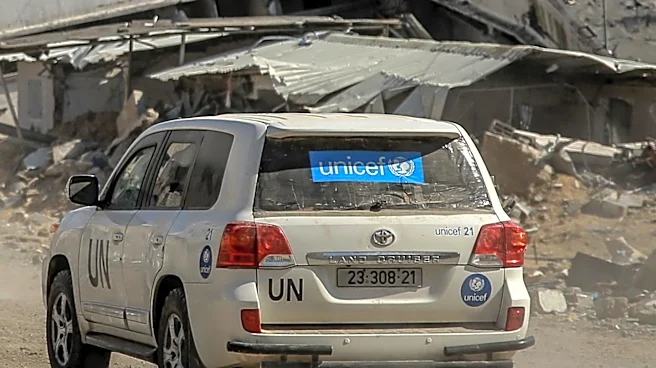
The rise of a shadow economy in Gaza has profound implications, creating a coercive economic environment where basic necessities are increasingly commodified and controlled by informal actors. This shift has led to significant wealth concentration among a few 'war merchants' and liquidity brokers, while the traditional commercial middle class has been decimated. The absence of a regulated market has resulted in extreme price engineering and geographical disparities, with prices fluctuating wildly based on rumors and security conditions. For instance, a sack of flour can cost ten times more in northern Gaza than in the central or southern parts. The banking system's collapse has also created a parallel market for cash, where commissions for converting digital funds to physical cash can reach up to 30%, severely impacting individuals receiving aid or salaries. This economic environment exacerbates humanitarian challenges, forcing displaced persons to sell aid for cash and undermining the effectiveness of humanitarian responses, as documented by organizations like Human Rights Watch and Oxfam.
What's Next?
The future of Gaza's economy remains uncertain, with experts divided on the persistence of the shadow economy. Some analysts believe that the wealth accumulated by war merchants and brokers during the conflict will grant them significant financial influence, allowing them to control market joints even after hostilities cease. The extensive time required to rehabilitate the banking system, rebuild infrastructure, and restore legal authority, estimated to be many years by the United Nations, suggests that informal markets and cash transactions will likely dominate in the medium term. Conversely, officials in Palestinian chambers of commerce anticipate that these informal patterns will gradually fade once crossings reopen and official import activities resume, leading to a collapse in black market prices. However, the primary challenge will be addressing the structural distortions created by this shadow economy, including wealth concentration, the destruction of the middle class, and the need for new financing programs to reintegrate displaced merchants and artisans into a formal economic system.
Beyond the Headlines
The emergence of Gaza's shadow economy highlights deeper ethical and societal implications beyond immediate economic concerns. The commodification of humanitarian aid and the exploitation of desperate populations by 'crisis merchants' raise serious questions about accountability and the protection of vulnerable communities during conflict. The breakdown of social order and the rule of law have fostered an environment where basic human needs become bargaining chips, leading to increased class divides within the displaced community. The transformation of skilled professionals, such as carpenters making coffins or engineers charging phones, underscores the profound loss of human capital and productive capacity. This situation also reveals the long-term psychological and social trauma inflicted by prolonged conflict, as individuals are forced to adapt to extreme circumstances, potentially leading to a lasting informalization of economic activities and a erosion of trust in formal institutions.