
What's Happening?
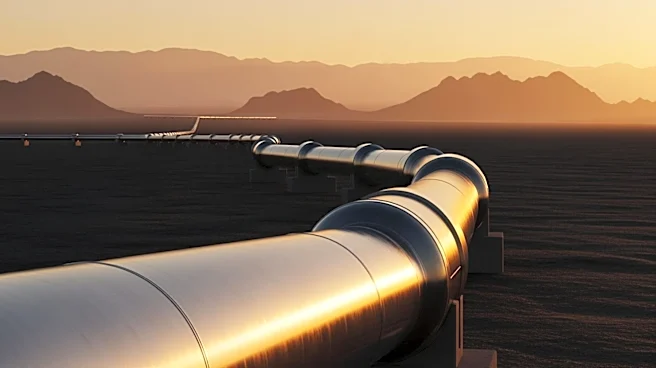
The Abu Dhabi National Oil Company (ADNOC) is expediting the construction of a new oil pipeline to bypass the Strait of Hormuz, a strategic move amid regional tensions. The pipeline, known as the West-East
Pipeline, will transport crude oil to the port of Fujairah, doubling ADNOC's export capacity. This development comes as the UAE seeks to reduce its dependency on the Strait of Hormuz, which has been a focal point of geopolitical tensions, particularly with Iran. The UAE's decision to accelerate this project follows its recent resignation from OPEC, aiming to increase its oil production capacity beyond the current quotas.
Why It's Important?
The construction of the pipeline is a strategic response to the geopolitical instability surrounding the Strait of Hormuz, a critical chokepoint for global oil shipments. By bypassing the Strait, the UAE aims to secure its oil exports against potential disruptions caused by regional conflicts. This move could alter the dynamics of global oil markets, as it allows the UAE to increase its export capacity independently of OPEC constraints. The project also highlights the UAE's efforts to enhance its energy security and economic resilience in the face of regional threats, potentially influencing other Gulf states to pursue similar strategies.
What's Next?
The pipeline is expected to be operational by 2027, providing the UAE with a more secure and reliable route for oil exports. As construction progresses, the UAE may face diplomatic and logistical challenges, particularly from Iran, which has historically opposed such bypass routes. The international community will likely monitor the situation closely, as the pipeline's completion could shift the balance of power in the region's energy sector. Additionally, the UAE's increased production capacity may lead to further discussions within OPEC regarding production quotas and market stability.