







What's Happening?
The New Jersey Agricultural Society has officially joined the U.S. Environmental Protection Agency's (EPA) Feed It Onward program. This initiative aims to reduce food waste and address food insecurity across the nation. Through its Farmers Against Hunger
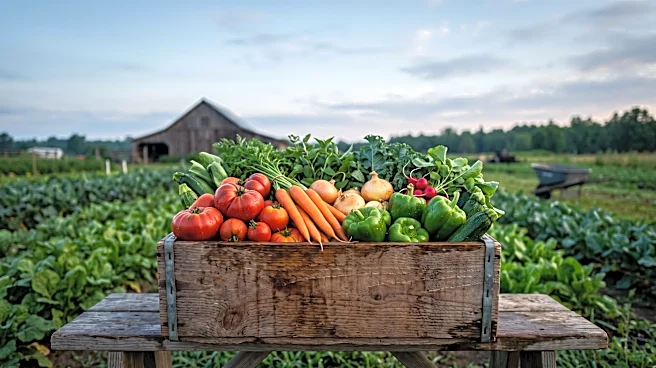
program, the New Jersey Agricultural Society works with farmers and wholesalers to recover surplus produce that would otherwise go to waste. This produce is then distributed to food banks, churches, and other community organizations throughout New Jersey, providing fresh food to those in need. The process involves 'gleaning,' where volunteers and food rescue organizations collect surplus crops from farms, transport them to refrigerated storage, and then distribute them. EPA Region 2 Regional Administrator Michael Martucci highlighted that the program helps bridge the gap between farmers and hunger relief organizations by efficiently managing surplus crops during harvest season. The New Jersey Agricultural Society's participation in Feed It Onward will allow it to share its decades of experience in food recovery and distribution with other organizations nationwide, while also learning from their approaches.
Why It's Important?
This partnership is significant because it tackles two critical issues simultaneously: food waste and food insecurity. In New Jersey, the Farmers Against Hunger program has demonstrated a successful model for diverting edible produce from landfills and redirecting it to communities facing hunger. By joining the EPA's national Feed It Onward program, the New Jersey Agricultural Society's proven methods can be scaled and replicated across the country. This collaboration fosters a national platform for sharing best practices, potentially leading to more efficient food recovery systems and increased access to nutritious food for vulnerable populations nationwide. The initiative also highlights the vital role of volunteers and partnerships between agricultural producers and charitable organizations in creating sustainable solutions for hunger relief. Reducing food waste also has environmental benefits, as it lessens the burden on landfills and reduces greenhouse gas emissions associated with food production and disposal.
What's Next?
The New Jersey Agricultural Society will contribute its expertise to the Feed It Onward program, sharing knowledge gained from 30 years of working with farmers, volunteers, and hunger relief organizations. This will facilitate the adoption of effective food recovery strategies in other communities. The EPA's initiative is designed to build on existing efforts by connecting organizations with similar goals, encouraging a collaborative approach to food waste prevention and distribution. Future steps will likely involve continued information exchange, development of new partnerships, and the implementation of similar 'gleaning' and distribution models in other states. The program aims to expand its network of businesses, farmers, nonprofits, and communities, ultimately working towards a more efficient and equitable food system across the U.S. The EPA will continue to highlight practical food waste prevention efforts and provide a national platform for successful approaches.
Beyond the Headlines
Beyond the immediate benefits of reducing food waste and feeding the hungry, this initiative underscores a broader shift towards sustainable resource management and community resilience. The 'gleaning' process, which involves collecting surplus crops, not only prevents waste but also strengthens local food systems by connecting agricultural producers directly with consumers in need. This model can inspire similar localized efforts, fostering a sense of community responsibility and self-sufficiency. Ethically, it addresses the paradox of food waste existing alongside widespread hunger, promoting a more just distribution of resources. Culturally, it reinforces the value of collaboration and volunteerism in tackling societal challenges. In the long term, such programs could contribute to a more circular economy for food, where resources are utilized to their fullest potential, minimizing environmental impact and maximizing social benefit.