



What's Happening?
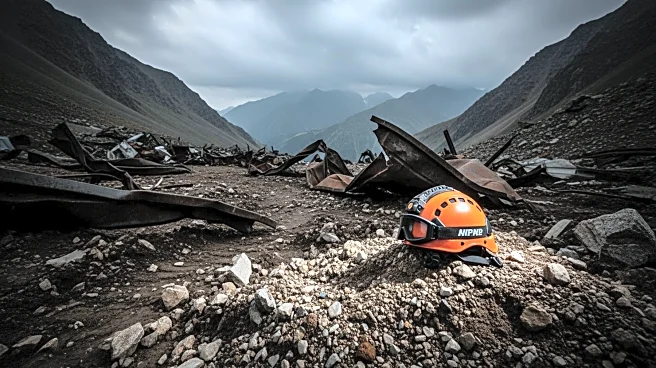
In Cebu City, Philippines, a tragic incident occurred when a massive mound of garbage collapsed at a landfill, resulting in the deaths of at least four workers and leaving over 30 others missing. The collapse happened suddenly, despite favorable weather
conditions, and has prompted a large-scale rescue operation. Rescuers, including police, firefighters, and disaster-response personnel, are working tirelessly to locate survivors amidst the dangerous debris. Twelve workers have been rescued with injuries, and authorities have detected signs of life in specific areas, necessitating careful excavation. The landfill, located in the village of Binaliw, employs 110 staff members, and the deceased include an engineer and a female office worker. The cause of the collapse remains unclear, and the incident has raised concerns about the safety and management of landfills in the region.
Why It's Important?
This disaster highlights significant safety and environmental concerns associated with landfill operations, particularly in developing regions. The collapse not only poses immediate risks to workers and rescuers but also underscores the broader issue of waste management in the Philippines. Landfills and open dumpsites have long been problematic, especially in areas near impoverished communities where residents often scavenge for survival. The incident may prompt a reevaluation of waste management practices and policies, potentially leading to stricter regulations and improved safety measures. Additionally, the tragedy could impact garbage disposal operations in Cebu City, a major hub for trade and tourism, affecting local businesses and residents.
What's Next?
Authorities are expected to continue rescue operations with increased urgency, deploying advanced equipment to safely excavate the site. The incident may lead to a temporary disruption in garbage collection services in Cebu City, necessitating alternative waste management solutions. In the long term, the government may face pressure to enforce stricter landfill regulations and invest in sustainable waste management systems to prevent similar tragedies. The disaster could also spark public discourse on environmental and safety standards, potentially influencing future policy decisions.
Beyond the Headlines
The collapse of the landfill in Cebu City serves as a stark reminder of the environmental and social challenges posed by inadequate waste management systems. It highlights the need for comprehensive strategies that address not only the technical aspects of waste disposal but also the socio-economic factors affecting vulnerable communities. The incident may catalyze efforts to close illegal dumpsites and promote sustainable practices, aligning with global environmental goals. Furthermore, it raises ethical questions about the responsibility of governments and corporations in ensuring the safety and well-being of workers and nearby residents.