

What's Happening?
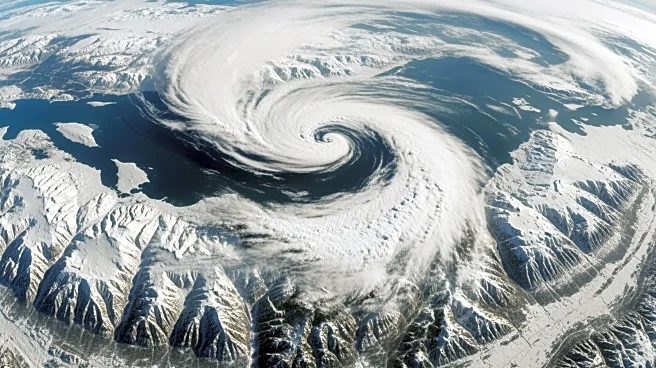
NASA's Terra satellite, equipped with the Moderate Resolution Imaging Spectroradiometer (MODIS), captured images of snow-covered landscapes across Hokkaido, Japan, on February 5, 2026. Hokkaido, known for its heavy snowfall, experienced a particularly
disruptive winter season in 2026. The island, which typically sees over 140 days of snowfall annually, was hit by a series of intense storms in January and February. These storms severely impacted transportation, leading to the closure of airports, road blockages, and suspension of train services. The satellite imagery also highlighted the island's geographical features, including its numerous active volcanoes and caldera lakes, as well as the sea ice patterns in the Sea of Okhotsk.
Why It's Important?
The severe winter conditions in Hokkaido underscore the challenges faced by regions prone to heavy snowfall, particularly in terms of infrastructure and transportation. The disruption of transportation systems can have significant economic impacts, affecting local businesses and the daily lives of residents. Additionally, the imagery from NASA's Terra satellite provides valuable data for understanding weather patterns and their effects on the environment. This information is crucial for improving weather forecasting and developing strategies to mitigate the impact of severe weather events. The situation in Hokkaido also highlights the importance of international cooperation in sharing satellite data to enhance global understanding of climate and weather phenomena.
What's Next?
As the winter season progresses, authorities in Hokkaido will likely continue to monitor weather conditions closely and implement measures to manage the impact of snowstorms on transportation and infrastructure. Efforts may include enhancing snow removal operations and improving communication with residents about weather-related disruptions. Additionally, the data collected by NASA's Terra satellite will contribute to ongoing research on climate patterns and their implications for regions with similar weather challenges. This research could inform future policies and infrastructure planning to better prepare for and respond to extreme weather events.