







What's Happening?
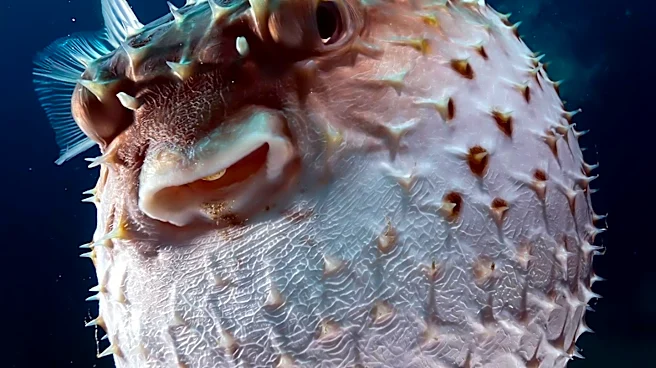
Greece has installed a floating barrier in the northern Gulf of Euboea to protect against the invasive Lagocephalus sceleratus, a toxic pufferfish species. This measure follows a public health warning from the Greek Red Cross about the fish's dangerous
bites and lethal neurotoxin, tetrodotoxin. The barrier aims to prevent the fish from entering popular swimming areas, ensuring the safety of residents and tourists. The initiative is part of a broader effort to manage the ecological impact of the species, which has proliferated due to warming Mediterranean waters.
Why It's Important?
The installation of the floating barrier is a significant step in addressing the ecological and public health challenges posed by invasive species in the Mediterranean. The pufferfish's presence threatens local marine ecosystems and poses a direct risk to human safety due to its potent toxin. This initiative reflects the growing need for adaptive management strategies in response to climate change-induced shifts in marine biodiversity. Protecting coastal communities and preserving marine environments are critical for sustaining local economies and tourism, which are vital to Greece's economy.
What's Next?
Greek authorities plan to expand the use of floating barriers and implement a 'catch' program offering financial incentives for capturing the pufferfish. This program aims to reduce the population of the invasive species and mitigate its impact on local fisheries. The initiative may be extended to other affected regions, with ongoing monitoring and assessment of its effectiveness. Collaboration with neighboring countries and international organizations could enhance regional efforts to address the broader implications of invasive species in the Mediterranean.