






What's Happening?
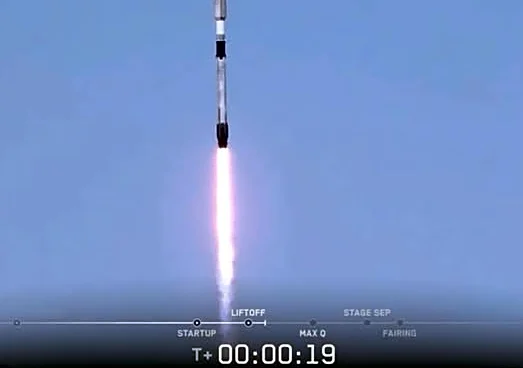
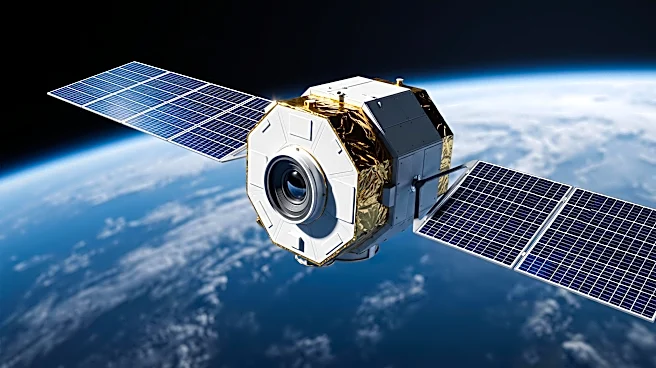
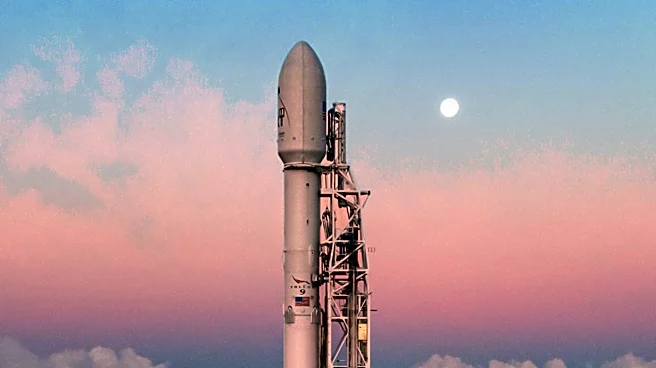
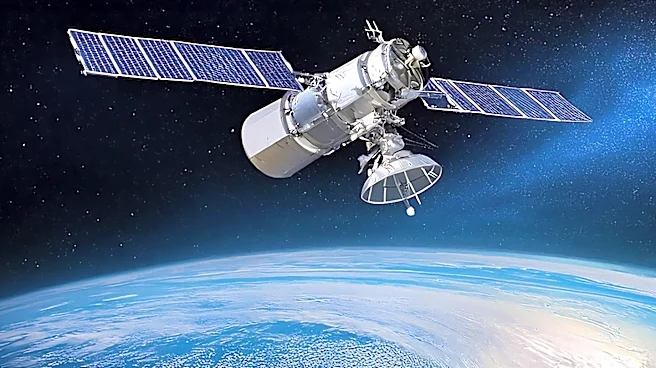
SpaceX is preparing to launch 21 data transport satellites for the U.S. Space Force's Space Development Agency (SDA) as part of the Tranche 1 Transport Layer A (T1TL-A) mission. This launch, scheduled for early Monday morning, marks the fourth mission sending
production satellites into orbit for the SDA. The satellites, manufactured by Northrop Grumman, were delivered to Vandenberg Space Force Base on September 28. This mission is a crucial component of the Proliferated Warfighter Space Architecture (PWSA), a broad constellation designed to provide the U.S. military and its allies with space-based capabilities, including missile tracking and secure communications. The Falcon 9 rocket's first stage booster, B1103, will be making its sixth flight, with a planned landing at Landing Zone 4. The PWSA's Tranche 1 is expected to begin providing operational capabilities to the Department of Defense in 2027, eventually comprising 126 Transport Layer satellites, 28 Tracking Layer satellites, and four missile defense demonstration spacecraft. With previous launches, 63 satellites are already in orbit.
Why It's Important?
This launch is vital for enhancing U.S. national security and military capabilities by expanding the Proliferated Warfighter Space Architecture (PWSA). The constellation's ability to provide assured, resilient, and low-latency military data and connectivity worldwide is critical for modern warfare. The interconnected Optical Inter-Satellite Links (OISLs) will significantly improve performance over traditional radio frequency crosslinks, offering lower latencies essential for prosecuting time-sensitive targets. This advanced infrastructure will enable the Department of Defense to maintain a continuous overwatch, neutralizing potential first-mover advantages by delivering data to warfighters globally almost instantaneously. The integration with systems like Link-16 and Integrated Broadcast System (IBS) will provide timely threat warnings and situational awareness, bolstering the U.S. military's operational effectiveness and strategic advantage in an increasingly contested space domain. The development underscores the growing importance of space as a theater of war, necessitating continuous investment in advanced space-based assets.
What's Next?
Following the Tranche 1 Transport Layer A (T1TL-A) mission, the U.S. Space Force's Space Development Agency (SDA) will continue to build out the Proliferated Warfighter Space Architecture (PWSA). Tranche 1, the initial component of this constellation, is anticipated to achieve operational capabilities for the Department of Defense starting in 2027. When fully deployed, Tranche 1 will consist of 126 Transport Layer satellites, 28 Tracking Layer satellites, and four missile defense demonstration spacecraft. The SDA plans for the Transport Layer to eventually include between 300 to 500 satellites in low Earth orbit, ensuring that 95 percent of the globe is in view of at least two T1TL satellites at any given time. Future missions under the National Security Space Launch (NSSL) Phase 2 contract, awarded to SpaceX, will continue to deploy these critical assets. The ongoing development will focus on integrating these satellites with existing military communication systems and continuously enhancing their capabilities to adapt to evolving threats and technological advancements.
Beyond the Headlines
The continuous deployment of advanced satellite constellations like the Proliferated Warfighter Space Architecture (PWSA) signifies a profound shift in military strategy, emphasizing space as a critical domain for national security. This initiative highlights the increasing reliance on space-based assets for intelligence, surveillance, reconnaissance, and secure communications, transforming how modern conflicts are waged. The development of such resilient and low-latency networks underscores a broader trend towards distributed and interconnected space architectures, aiming to mitigate vulnerabilities associated with traditional, fewer, and larger satellites. Ethically, the militarization of space raises questions about orbital debris, potential for conflict in space, and the distinction between military and civilian space activities. Legally, it pushes the boundaries of international space law, which currently lacks comprehensive regulations for space warfare. Culturally, it reflects a growing public awareness of space not just as a frontier for exploration, but as an essential component of geopolitical power and national defense, influencing future technological innovation and international relations.