







What's Happening?
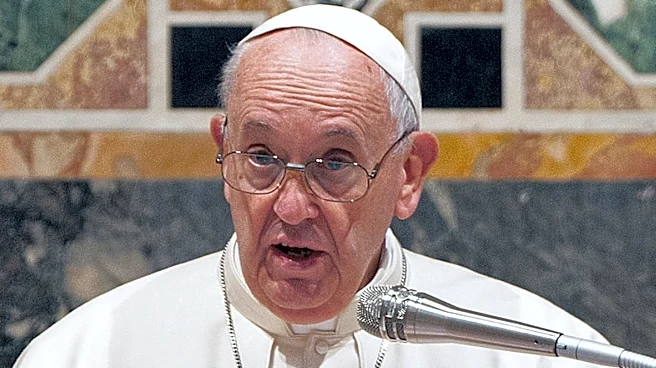
The U.S. Conference of Catholic Bishops (USCCB) has formally opposed a proposed federal rule by President Trump's administration that aims to expand access to fertility treatments, including in vitro fertilization (IVF). The bishops argue that IVF conflicts
with Catholic teachings on human life and reproduction. The proposed rule would allow employers to offer fertility benefits, including IVF, as a separate category of health benefits. While the Trump administration supports expanding IVF access to address declining birth rates, the Catholic Church maintains that IVF is morally impermissible as it separates conception from the marital act and often involves the destruction or freezing of embryos. This stance places the bishops at odds with one of Trump's key family-policy initiatives, despite Catholics being a significant voting bloc for him.
Why It's Important?
The disagreement between the Catholic bishops and the Trump administration highlights a significant political and ethical issue. Catholics are a crucial swing voting bloc, and their support has historically been pivotal in elections. The bishops' opposition to IVF reflects longstanding Catholic doctrine, which could influence Catholic voters who align with the Church's teachings. However, public opinion among Catholics shows a divide, with many supporting IVF despite the Church's stance. This situation presents a challenge for President Trump, who seeks to balance expanding fertility treatment access with maintaining support from religious leaders and their followers. The outcome of this debate could impact the administration's relationship with Catholic voters and influence future policy decisions on reproductive health.
What's Next?
The Trump administration may need to navigate this complex issue by considering the bishops' concerns while also addressing the broader public support for IVF. The proposed rule does not mandate IVF coverage but allows employers to offer it as a separate benefit, which could lead to further discussions on how to reconcile religious beliefs with healthcare policies. The administration's response to the bishops' opposition could affect its standing with Catholic voters and potentially lead to adjustments in the proposed rule to accommodate religious perspectives. The ongoing dialogue between the administration and religious leaders will likely continue as both sides seek a resolution that respects religious teachings while addressing the needs of families facing infertility.