




What's Happening?
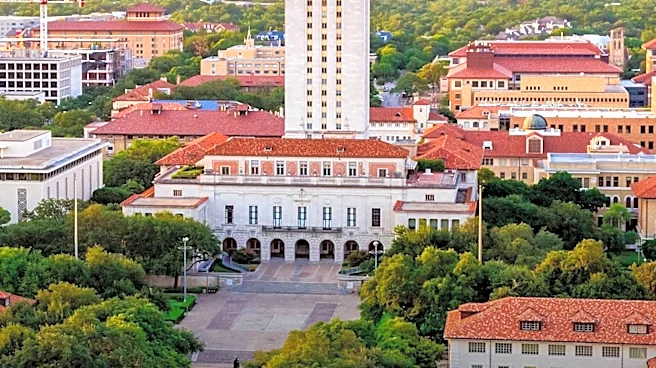
The University of Texas has announced the introduction of 24 new programs in its 2026-2028 undergraduate catalog. These include six new majors, five certificates, and 13 minors, focusing on contemporary issues such as artificial intelligence, national
defense, and modern technology. The College of Natural Sciences will offer new bachelor's degrees in neuroscience and computer science, linguistics and computer science, and history and computer science. The Cockrell School of Engineering is launching a major in materials science and engineering. Additionally, the Clements Center for National Security will offer a major in strategy and statecraft.
Why It's Important?
The introduction of these new programs reflects the University of Texas's commitment to adapting its curriculum to meet the evolving demands of the job market and societal needs. By focusing on interdisciplinary studies and emerging fields, the university aims to equip students with the skills necessary to tackle complex global challenges. This initiative could enhance the university's reputation as a leader in innovative education and attract a diverse student body interested in cutting-edge fields. The emphasis on areas like artificial intelligence and national security aligns with national priorities and could influence future educational trends.
What's Next?
The University of Texas will begin accepting applications for these new programs, with classes set to start in Fall 2027. The success of these programs will depend on their ability to attract students and faculty, as well as the university's capacity to integrate these new disciplines into its existing academic framework. The university may also seek partnerships with industry leaders to provide students with practical experience and job opportunities. As these programs develop, they could serve as models for other institutions looking to update their curricula in response to technological and societal changes.