
What's Happening?
The 29th U.S.-Spain Forum is scheduled to take place in San Juan, Puerto Rico, from November 12 to 14. This bilateral gathering, organized by the Fundación Consejo España–EE. UU. and the United States–Spain
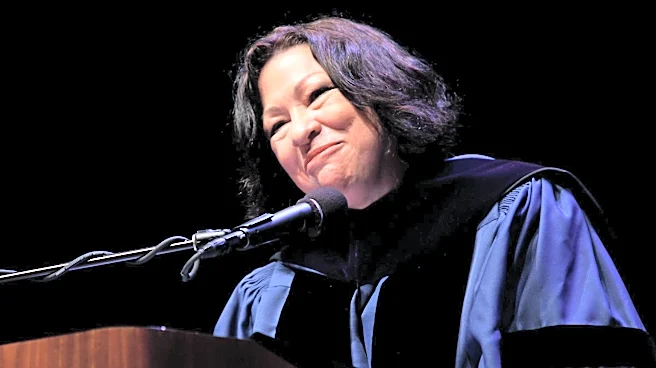
Council, will bring together institutional, political, business, academic, and cultural representatives from both countries. The forum aims to address key issues on the transatlantic agenda. Co-chairing the event will be Josu Jon Imaz, Chairman of the Fundación Consejo España–EE. UU. and CEO of Repsol, and U.S. Senator Ben Ray Luján of New Mexico, who is also the Honorary Chairman of the United States–Spain Council. Puerto Rico's Governor Jenniffer González-Colón will host a welcome reception. A significant highlight of the program will be a conversation with U.S. Supreme Court Justice Sonia Sotomayor, who will discuss her personal journey, roots, identity, leadership, public service, and legacy with Senator Luján. The forum's agenda is structured around three main sessions focusing on technology, energy, and healthcare, alongside a cultural discussion.
Why It's Important?
This forum serves as a crucial platform for strengthening dialogue and cooperation between Spain and the United States, fostering mutual understanding, and creating new opportunities for collaboration. The participation of high-level officials, including a U.S. Supreme Court Justice, U.S. Senators, Representatives, and key industry leaders, underscores the significance of transatlantic relations. Discussions on artificial intelligence, quantum computing, digital assets, energy costs, geopolitics, pharmaceutical innovation, and access to medicines directly impact U.S. economic interests, technological advancement, and public health policy. The inclusion of cultural discussions, particularly on the influence of Spanish-language culture, highlights the shared identity and cultural ties that can further bridge relations between the two nations. The forum's outcomes could influence bilateral trade agreements, technological partnerships, and collaborative efforts in addressing global challenges, benefiting various U.S. sectors and stakeholders.
What's Next?
The forum will proceed with its scheduled sessions from November 12 to 14 in San Juan, Puerto Rico. Following the discussions, it is anticipated that insights and recommendations will emerge from the expert panels on technology, energy, and healthcare. These discussions could lead to enhanced bilateral initiatives or policy considerations in areas such as digital frontier advancements, energy security, and pharmaceutical research and development. The cultural session, featuring U.S. Representative Joaquín Castro and Netflix Vice President Diego Ávalos, may foster further cultural exchange programs or collaborations. The broad institutional representation, including members from both U.S. political parties, suggests that the forum's outcomes could have bipartisan support and influence future U.S.-Spain relations. The event is expected to conclude with a reinforced commitment to ongoing dialogue and cooperation between the two countries.
Beyond the Headlines
The choice of Puerto Rico as the host for this significant bilateral forum carries deeper implications beyond logistical convenience. It highlights Puerto Rico's unique position as a bridge between the U.S. and Spanish-speaking cultures, underscoring its role in fostering international relations. The discussion with Justice Sonia Sotomayor, a prominent figure of Hispanic heritage, further emphasizes themes of identity and cultural connection within the broader U.S.-Spain relationship. The forum's focus on emerging technologies like AI and quantum computing, alongside critical sectors like energy and healthcare, reflects a proactive approach to addressing future global challenges. This gathering not only aims to strengthen diplomatic and economic ties but also to explore shared cultural heritage and its potential to deepen understanding and collaboration in an increasingly interconnected world. The event serves as a testament to the enduring importance of transatlantic partnerships in navigating complex global landscapes.