







What's Happening?
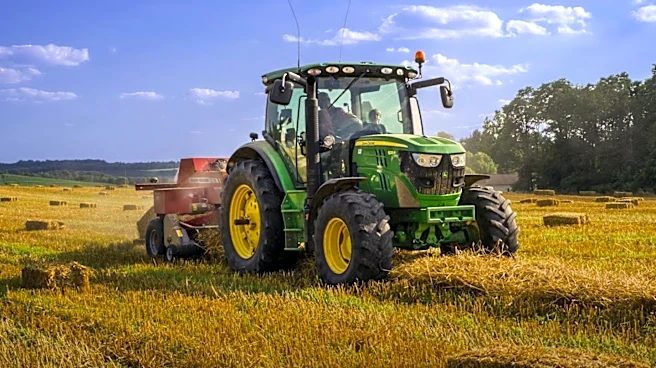
The John Deere Foundation has pledged $18.5 million over several years to support food banks and increase the availability of local food for families facing hunger in the U.S. This initiative, termed 'farm-to-plate,' includes $17 million designated for Feeding
America partner food banks and an additional $1.5 million for The Farmlink Project, an organization that rescues surplus produce from farms. The announcement was made at the Food Bank of Iowa's headquarters in Des Moines. Of the total commitment, over $13 million is specifically allocated to food security efforts within Iowa. This includes $2.8 million for the Food Bank of Iowa, River Bend Food Bank, and Northeast Iowa Food Bank to scale up direct purchases from local farms over three years. These three food banks currently source from about 20 farms but aim to expand to over 100 with the new funding. Deanna Kovar, president of worldwide ag and turf division for production and precision ag at John Deere, emphasized that stronger local sourcing provides greater access to fresh produce, proteins, and dairy for food banks, while creating new opportunities for farmers.
Why It's Important?
This significant investment by the John Deere Foundation addresses a critical issue of food insecurity in the U.S., particularly in agricultural states like Iowa. By focusing on a 'farm-to-plate' model, the initiative not only helps feed vulnerable populations but also supports local farmers by creating new market opportunities for their produce. This dual benefit strengthens both the food supply chain and local economies. The funding will enable food banks to offer more nutritious, fresh, and locally sourced food, which is often more expensive and less accessible through traditional donation channels. In a context where food prices are rising and federal support programs like SNAP have seen reductions, private sector contributions like this become even more vital in mitigating hunger and supporting community resilience.
What's Next?
The allocated funds will be distributed over several years, with specific amounts directed to Feeding America partners and The Farmlink Project. In Iowa, the three designated food banks will begin scaling up their direct purchases from local farms, aiming to significantly increase their network of farmer suppliers. This will involve establishing new partnerships and logistical arrangements to efficiently transport fresh produce, proteins, and dairy. John Deere employees will also participate in volunteer meal packing events. The initiative's progress will likely be monitored to assess its impact on food insecurity rates and the economic benefits for local farmers. The success of this program could serve as a model for other corporate philanthropic efforts aimed at addressing food system challenges.
Beyond the Headlines
The John Deere Foundation's initiative highlights a growing recognition of the interconnectedness between agricultural sustainability, food waste, and social welfare. By supporting The Farmlink Project, the program tackles the issue of food waste at the farm level, redirecting surplus produce that would otherwise go to waste to those in need. This approach not only addresses hunger but also promotes environmental sustainability by reducing waste. Furthermore, the emphasis on local sourcing strengthens regional food systems, making them more resilient to disruptions and fostering a closer relationship between producers and consumers. This model moves beyond simple charity, aiming for systemic change by building more robust and equitable food networks, demonstrating how corporate philanthropy can drive both social impact and economic development within the agricultural sector.