







What's Happening?
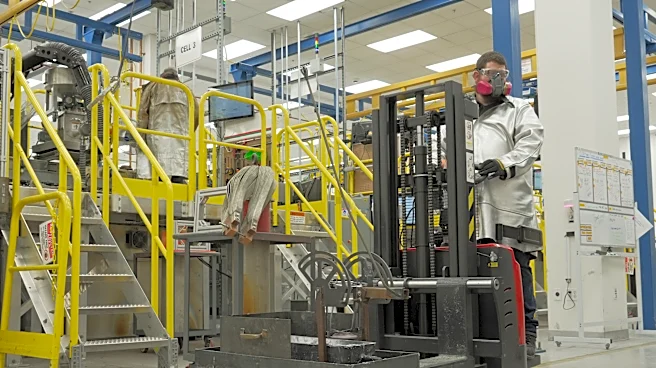
The U.S. Department of Defense has signed agreements with defense industry corporations to significantly increase the production of PAC-3 MSE and THAAD missiles. This decision comes in response to the depletion of missile stockpiles due to conflicts in the Middle
East and Ukraine. The Pentagon aims to triple and quadruple production capacities to rebuild and replenish its interceptor missile reserves. The strategy involves working directly with lower-tier component suppliers to address supply chain bottlenecks and optimize manufacturing capabilities. This initiative is part of a broader effort to ensure long-term supply stability and maintain military readiness.
Why It's Important?
The expansion of missile production is crucial for restoring the U.S. military's depleted stockpiles and maintaining its strategic posture. The shortage of critical ammunition poses a significant risk to national security and the U.S.'s ability to respond to future threats. By increasing production capacities, the Pentagon aims to ensure a steady supply of advanced missile systems, which are essential for high-intensity conflict scenarios. This move also highlights the importance of a robust and flexible supply chain in supporting the defense industry's long-term strategy.
What's Next?
The Pentagon's efforts to increase missile production are expected to address the current shortage and ensure long-term supply stability. The new framework agreements focus on addressing specific technical issues and optimizing manufacturing capabilities. These efforts are crucial for restoring the U.S. military's missile reserves and maintaining its strategic posture. The Pentagon's strategy involves working directly with component suppliers to address production bottlenecks and optimize manufacturing capabilities. These efforts are crucial to restoring the U.S. military's missile reserves and maintaining its strategic posture.