



What's Happening?
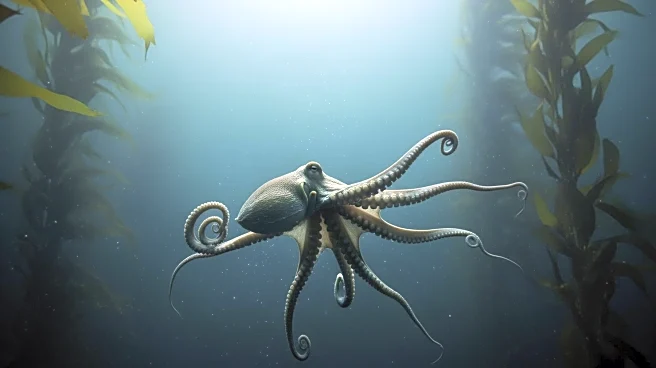
On November 6, 2025, researchers from the Monterey Bay Aquarium Research Institute (MBARI) observed a rare seven-arm octopus, scientifically known as Haliphron atlanticus, during an expedition in Monterey Bay. The sighting was made at a depth of approximately
700 meters using a remotely operated vehicle. This marks only the fourth time in four decades that the MBARI team has encountered this species. The octopus was recorded holding a smaller red helmet jellyfish, a bioluminescent creature that typically avoids sunlight. This observation provided further insight into the octopus's diet, which includes gelatinous animals. The seven-arm octopus is notable for its size, with females growing up to 13 feet long and weighing 165 pounds. Despite its name, the species has eight arms, but males often keep one arm hidden, giving the appearance of having only seven.
Why It's Important?
The discovery of the seven-arm octopus in Monterey Bay is significant for marine biology, as it enhances understanding of deep-sea ecosystems and the biodiversity within them. The octopus's diet, consisting of gelatinous animals, challenges previous assumptions about the dietary habits of large marine species. This finding could influence future research on marine food webs and the ecological roles of deep-sea creatures. Additionally, the sighting underscores the importance of advanced technology, such as remotely operated vehicles, in exploring and documenting life in the ocean's twilight zone, a region that remains largely unexplored. The research contributes to broader efforts to understand and protect marine biodiversity, which is crucial for maintaining healthy ocean ecosystems.
What's Next?
Further research is likely to focus on the behavioral patterns and ecological roles of the seven-arm octopus. Scientists may conduct additional expeditions to observe the species in its natural habitat, aiming to gather more data on its interactions with other marine life and its adaptation strategies in the deep sea. The findings could prompt discussions on the conservation of deep-sea environments, as understanding these ecosystems is vital for their protection. Collaboration with other marine research institutions may also be pursued to compare findings and enhance the global knowledge base on deep-sea biodiversity.