


What's Happening?
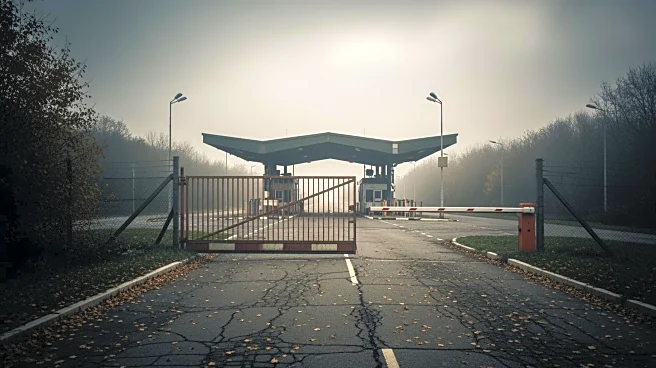
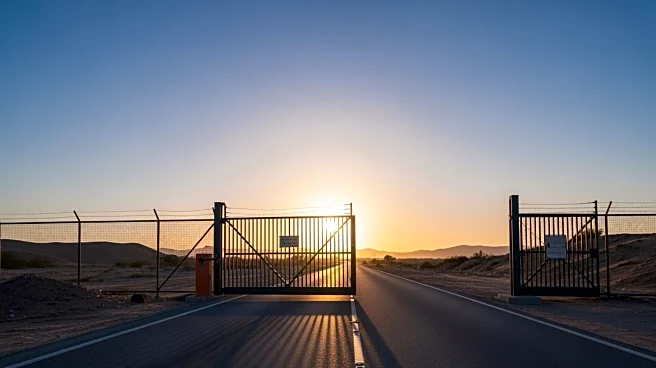
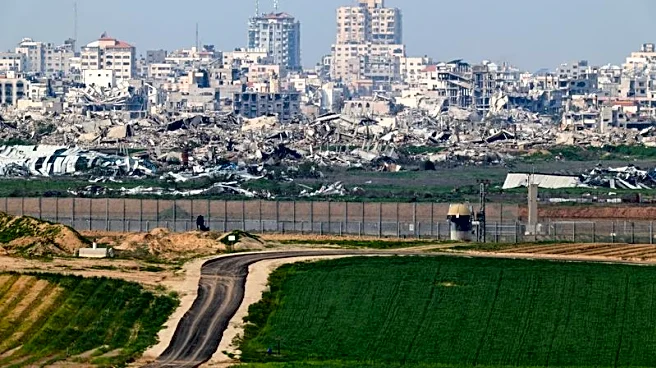
The Rafah border crossing, a critical gateway for Gaza, is anticipated to reopen following the recovery of the last hostage's remains in Gaza. This development is part of the second phase of a U.S.-brokered ceasefire. The crossing, which connects Gaza to Egypt,
was previously controlled by Egypt and is vital for the movement of goods and people. Israel has agreed to reopen the crossing for pedestrian passage, subject to Israeli inspection. Hamas has called for the crossing to be opened without restrictions, emphasizing its importance for medical treatment, international travel, and economic activities. The reopening is expected to facilitate the entry of humanitarian aid, which is crucial for Gaza's population of over 2 million people, who are in dire need of food, medicine, and other essentials.
Why It's Important?
The reopening of the Rafah crossing is significant as it represents a potential easing of the humanitarian crisis in Gaza. The crossing is a lifeline for Gazans, allowing access to medical care and economic opportunities. Its reopening could alleviate some of the economic hardships faced by the territory, enabling the export of Palestinian products and the import of essential goods. The move also reflects ongoing diplomatic efforts to stabilize the region and address humanitarian needs. However, the situation remains complex, with Israel's security concerns and Egypt's stance on Palestinian refugees influencing the dynamics at the crossing.
What's Next?
The exact timing and conditions of the Rafah crossing's reopening remain uncertain. Israel's stipulation for security checks and Egypt's position on refugee resettlement will likely shape the operational aspects of the crossing. The reopening is expected to be a focal point in Gaza's reconstruction efforts, with international stakeholders monitoring the situation closely. The crossing's role in the broader ceasefire agreement and its impact on regional stability will be key areas of focus in the coming weeks.