

What's Happening?
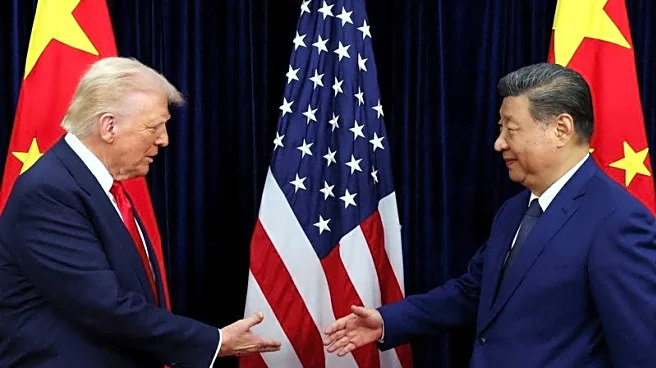
The White House announced that China has agreed to postpone President Trump's visit to Beijing due to the ongoing conflict in the Middle East, which complicates the U.S. president's domestic and international standing. The visit, initially scheduled for
late March, is now expected to occur in May. This delay comes as the war in Iran, a country with friendly ties to China, continues to escalate, affecting global oil prices and U.S. politics. The meeting between President Trump and Chinese President Xi Jinping was anticipated to address the next phase of the U.S.-China trade war, which has been under a temporary truce since October. The delay may relieve Beijing, which had not confirmed the original meeting dates and was reportedly frustrated by the lack of U.S. planning.
Why It's Important?
The postponement of President Trump's visit to China highlights the significant impact of the Middle East conflict on global geopolitics, particularly U.S.-China relations. The delay could increase pressure on President Trump to secure a favorable deal with China, especially as the U.S. midterm elections approach. The ongoing war in Iran is causing oil prices to rise, which could lead to inflation and economic challenges in the U.S., potentially affecting voter sentiment. China's strategic interests in the region and its economic ties with Iran add complexity to the U.S.-China dynamic. The outcome of the postponed summit could influence trade negotiations and economic policies, with potential repercussions for both countries' economies.
What's Next?
The rescheduled meeting between President Trump and President Xi is likely to focus on trade negotiations and the implications of the Middle East conflict. As the U.S. midterm elections draw near, President Trump may seek to demonstrate economic achievements to bolster his domestic standing. China's leverage in trade talks could increase if the U.S. economy faces inflationary pressures due to rising oil prices. The geopolitical landscape may shift depending on the outcomes of the summit and the ongoing conflict in Iran. Both countries have a vested interest in maintaining stable economic relations, but the evolving situation could lead to new challenges and opportunities in U.S.-China diplomacy.