





What's Happening?
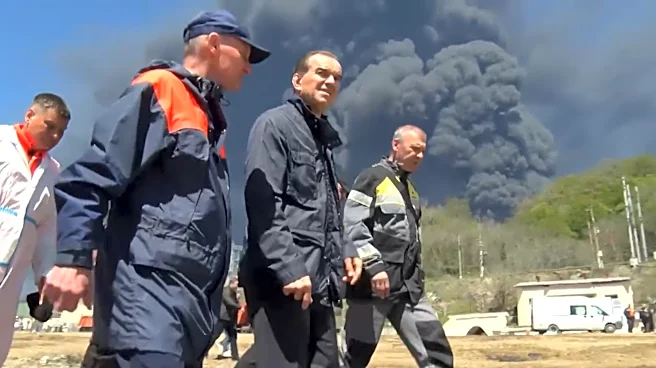
Ukrainian military actions have led to significant disruptions in Russian-occupied Crimea, resulting in the introduction of fuel rationing. Ukrainian forces have targeted the logistics corridor connecting mainland Russia to Crimea, causing shortages in fuel supplies.
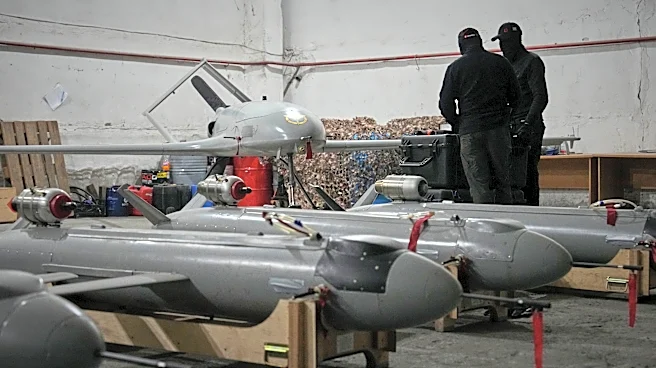
The Russian-installed head of Crimea, Sergey Aksyonov, announced the implementation of gasoline coupons and limits on fuel sales to manage the crisis. This move follows Ukrainian drone strikes that have severely impacted the transportation of military equipment and supplies along the key 'Novorossiya' route. The strikes are part of Ukraine's broader strategy to undermine Russian military logistics in the region.
Why It's Important?
The fuel rationing in Crimea underscores the effectiveness of Ukraine's military strategy in disrupting Russian supply lines. By targeting critical infrastructure, Ukraine aims to weaken Russia's military capabilities in the occupied territories. This development highlights the ongoing challenges faced by Russian forces in maintaining control over occupied regions. The situation also reflects the broader geopolitical tensions and the impact of military actions on civilian life in occupied areas. The introduction of fuel rationing is a significant measure, indicating the severity of the supply disruptions caused by Ukrainian strikes.
What's Next?
The fuel rationing measures are expected to remain in place until the situation stabilizes, which authorities anticipate could take up to a month. The ongoing military actions by Ukraine suggest that further disruptions to Russian logistics are likely. This could lead to increased pressure on Russian forces and potentially influence the broader dynamics of the conflict. The international community may continue to monitor the situation closely, particularly in light of the humanitarian implications for civilians in the affected regions.
Beyond the Headlines
The situation in Crimea highlights the complex interplay between military strategy and civilian impact in conflict zones. The use of advanced military technology, such as drones and precision missiles, is reshaping the nature of warfare and its consequences. The fuel rationing also raises questions about the sustainability of Russian control over occupied territories and the long-term implications for regional stability. Additionally, the humanitarian aspect, including the reported abductions of Ukrainian children, adds another layer of complexity to the conflict.