



What's Happening?
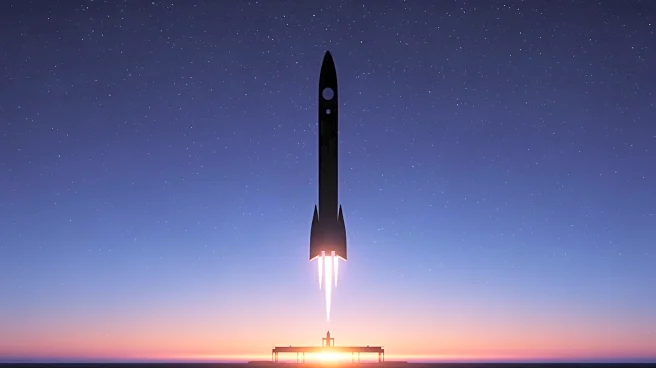
A SpaceX Falcon 9 rocket is scheduled to launch from Cape Canaveral, Florida, on March 1, 2026. The mission involves deploying 29 Starlink satellites into low-Earth orbit. The launch window is set between 7:07 p.m. and 11:07 p.m. ET. Weather conditions
permitting, the launch may be visible from as far north as Jacksonville Beach and as far south as West Palm Beach. This event is part of SpaceX's ongoing efforts to expand its Starlink satellite constellation, which aims to provide global internet coverage. The launch will take place from Launch Complex 40 at Cape Canaveral Space Force Station, and no sonic booms are expected during the event.
Why It's Important?
The deployment of 29 Starlink satellites is a significant step in SpaceX's mission to create a global broadband network. This initiative has the potential to revolutionize internet access, particularly in remote and underserved areas. By increasing the number of satellites in orbit, SpaceX enhances its capacity to provide high-speed internet services worldwide. This launch also underscores the growing role of private companies in space exploration and satellite deployment, which could lead to increased competition and innovation in the telecommunications industry. The success of such missions could have far-reaching implications for global connectivity and economic development.
What's Next?
Following the launch, the satellites will be positioned in low-Earth orbit to begin their operational phase. SpaceX will continue to monitor the deployment and performance of the satellites to ensure they meet the intended service objectives. Future launches are expected as part of SpaceX's plan to expand the Starlink network further. Stakeholders, including internet service providers and global telecommunications companies, will likely watch closely to assess the impact of Starlink on the market. Additionally, regulatory bodies may evaluate the implications of increased satellite traffic in low-Earth orbit.