







What's Happening?
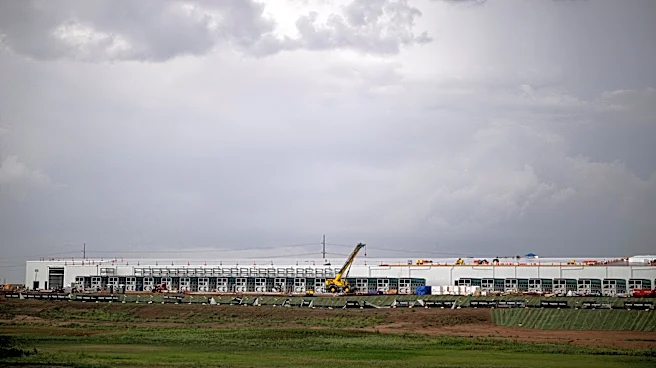
A recent investigation has highlighted the significant water usage by tech companies, including OpenAI, Google, Microsoft, Meta, and Amazon, which is impacting local communities. In Fayette County, Georgia, residents experienced reduced water pressure
due to a data center owned by Blackstone consuming 29 million gallons of local water without authorization. Similar issues have been reported in Tucson, Arizona, where unauthorized water usage for a data center project led to community backlash. These incidents reflect a broader pattern of tech companies drawing large quantities of water, often without proper oversight, affecting local water supplies.
Why It's Important?
The water consumption by tech companies is raising concerns about resource allocation and environmental impact. As data centers require substantial amounts of water for cooling, communities are facing challenges in maintaining adequate water supplies. This situation underscores the need for stricter regulations and oversight to ensure that tech companies do not compromise local resources. The issue is particularly pressing in drought-prone areas, where water scarcity is already a significant concern. The broader implications include potential conflicts over resource management and the need for sustainable practices in the tech industry.
What's Next?
Communities affected by excessive water usage are likely to push for more stringent regulations and oversight of tech companies' operations. Local governments may consider implementing policies to ensure that water usage is monitored and controlled, preventing unauthorized consumption. Additionally, there may be increased advocacy for sustainable practices within the tech industry, encouraging companies to adopt water-efficient technologies and reduce their environmental footprint. Stakeholders, including environmental groups and local residents, are expected to continue voicing their concerns and seeking accountability from tech companies.
Beyond the Headlines
The ethical implications of tech companies' water usage extend beyond immediate resource concerns. There is a growing awareness of the need for corporate responsibility in environmental stewardship. The situation highlights the importance of balancing technological advancement with sustainable practices, ensuring that communities are not adversely affected by industrial activities. Long-term shifts may include increased collaboration between tech companies and local governments to develop solutions that prioritize environmental sustainability and community welfare.