







What's Happening?
Italy has temporarily suspended the Schengen Agreement with Spain, reinstating border controls due to a surge in irregular migration. This decision, effective since August 1, will remain until at least August 15. The suspension primarily targets non-EU
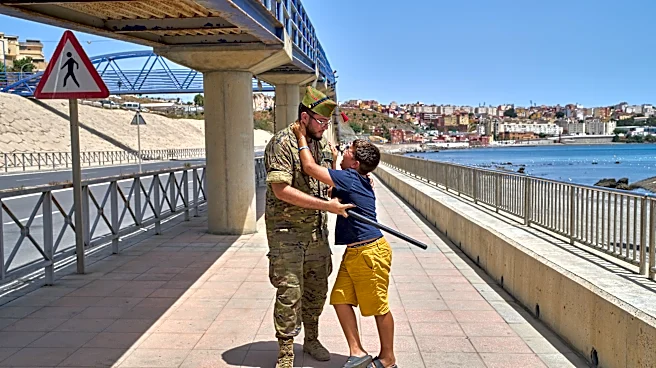
nationals arriving from Spain by air or sea, while EU citizens, including Spaniards, are not affected. This move follows a significant influx of migrants into Spain's North African enclave of Ceuta, with 72,000 people arriving on July 30. In response, Spain has also implemented border checks on travelers from Italy at its major airports, including Madrid and Barcelona. The Schengen Area typically allows passport-free travel across 29 European countries, but member states can temporarily reintroduce controls for security or public order reasons.
Why It's Important?
The suspension of the Schengen Agreement between Italy and Spain highlights the ongoing challenges the European Union faces in managing migration. This action underscores the strain on EU countries to balance open borders with national security concerns. The situation in Ceuta reflects broader migration pressures on Europe, which can lead to diplomatic tensions and impact intra-EU relations. The reintroduction of border controls could affect tourism and trade between the two countries, potentially leading to economic repercussions. Additionally, this development may prompt other EU nations to reconsider their border policies in response to migration pressures.
What's Next?
The temporary border controls are set to remain until September 7, as Spain continues to monitor the situation. Italy's Foreign Minister Antonio Tajani expressed hope that the suspension could be lifted soon, contingent on the migration situation stabilizing. Both countries may engage in diplomatic discussions to address the underlying causes of the migration surge and seek collaborative solutions. The EU may also convene to discuss broader strategies for managing migration and ensuring the security of its external borders. The outcome of these discussions could influence future EU migration policies and border management practices.