


What's Happening?
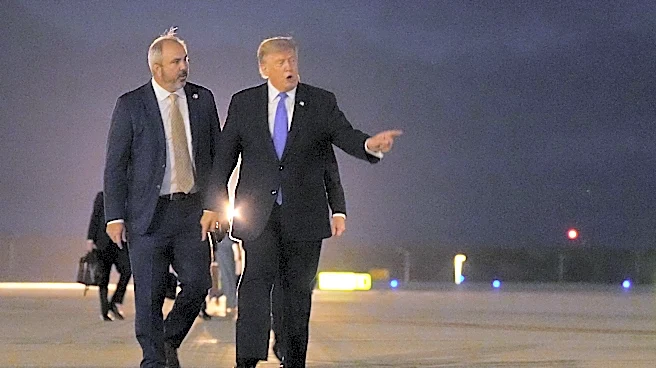
President Trump is facing scrutiny for his handling of tensions with Iran, particularly regarding the strategic Strait of Hormuz. Despite his previous criticism of former President Obama's Iran deal, Trump has been involved in a diplomatic process that
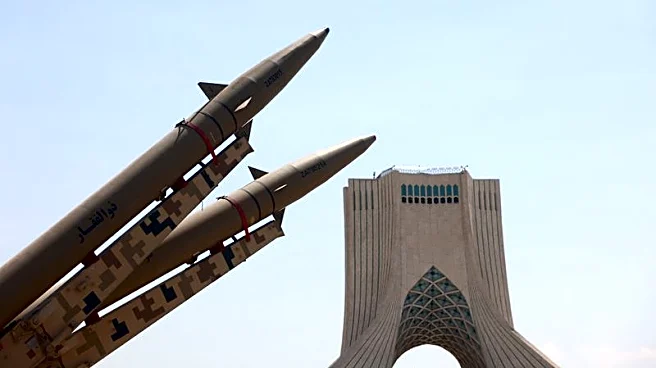
could potentially give Iran significant control over the Strait. This development follows a series of ultimatums issued by Trump, which he has not enforced, leading to perceptions of a lack of strength in his approach. In March, Trump threatened military action if Iran did not open the Strait, but later postponed these actions after discussions with Tehran. The situation remains tense as Iran's leaders appear to believe they can withstand further U.S. pressure.
Why It's Important?
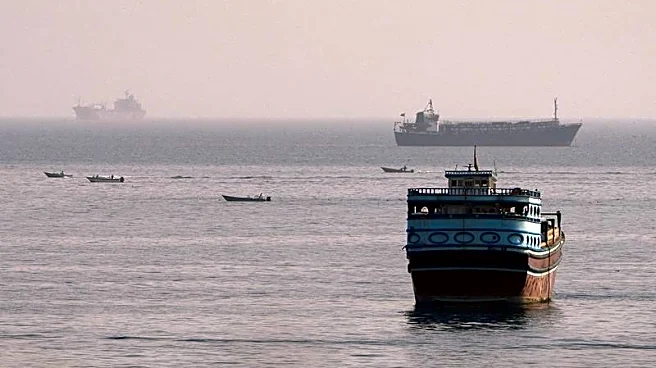
The situation is significant as it impacts U.S. foreign policy and its relations with Iran, a key player in the Middle East. Control over the Strait of Hormuz is crucial, as it is a vital passage for global oil shipments. The U.S.'s approach to Iran could affect international oil markets and geopolitical stability in the region. Additionally, Trump's handling of the situation may influence his political standing domestically, as it contrasts with his previous hardline stance against Iran. The outcome of these diplomatic efforts could have long-term implications for U.S. influence in the Middle East.
What's Next?
The next steps involve monitoring Iran's response to U.S. diplomatic efforts and any potential military actions. The U.S. may continue to engage in negotiations to ensure the Strait remains open, while balancing the need to project strength. Political leaders and international stakeholders will likely watch closely to see if Trump can secure a favorable outcome without escalating tensions further. The situation could also influence upcoming U.S. elections, as foreign policy remains a critical issue for voters.