






What's Happening?
Reuters journalist Giulia Paravicini recently visited Asmara, Eritrea's capital, to report on daily life in one of the world's most isolated countries. Her reporting, featured in 'The Horn' podcast, included discussions with Eritrean officials and insights
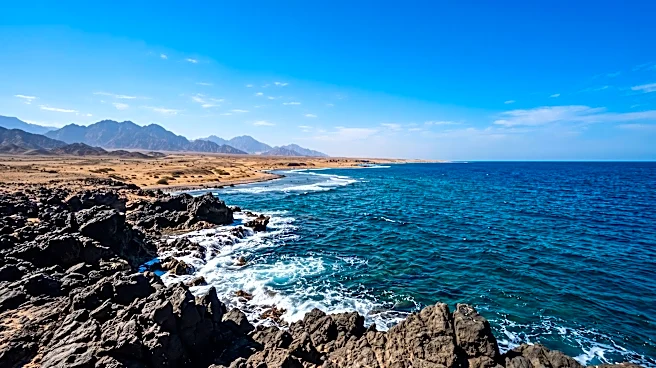
into the future of the aging regime. Paravicini explored Eritrea's perspective on Ethiopia's push for sea access and the Eritrean officials' concerns about a potential attack on the southern port of Assab. The report also touched upon allegations of Eritrean support for Ethiopian opposition groups and reports of Eritrean troops entering Tigray during recent conflicts. Additionally, Paravicini examined Eritrea's evolving regional relationships, particularly its growing ties with Egypt and renewed engagement with Washington, and its potential to capitalize on the Red Sea's increasing strategic importance.
Why It's Important?
Giulia Paravicini's reporting from Eritrea is significant because it offers a rare glimpse into a highly secretive nation, providing crucial insights into its internal dynamics and external relations. Eritrea's isolation makes independent journalistic accounts invaluable for understanding its political landscape, human rights situation, and regional impact. The discussions about Ethiopia's maritime ambitions and Eritrea's fears regarding the port of Assab highlight the ongoing tensions and strategic competition in the Horn of Africa. Furthermore, Eritrea's alleged involvement in Ethiopian conflicts and its shifting alliances with Egypt and the United States underscore the complex geopolitical chessboard of the region. This reporting helps to inform international policymakers, humanitarian organizations, and the public about a critical, yet often opaque, player in East African affairs.
What's Next?
The insights from Giulia Paravicini's reporting suggest that Eritrea's role in the Horn of Africa will continue to be a focal point for regional stability and international diplomacy. Future developments may include further shifts in Eritrea's foreign policy, particularly concerning its relationships with Ethiopia, Egypt, and the United States. The strategic importance of the Red Sea is likely to intensify, prompting Eritrea to seek ways to leverage its geographical position. Continued monitoring of Eritrea's internal political situation and its engagement with neighboring conflicts will be essential for understanding the trajectory of the region. The potential for both cooperation and renewed tensions remains high, making ongoing journalistic scrutiny vital.
Beyond the Headlines
Giulia Paravicini's ability to report from within Eritrea offers a deeper understanding of the challenges faced by journalists in accessing and reporting from closed societies. Her work highlights the ethical considerations and diplomatic complexities involved in covering nations with restrictive media environments. Beyond the immediate political implications, her reporting sheds light on the human experience within an isolated state, providing context for the daily lives of its citizens. The examination of Eritrea's historical grievances and its strategic calculations in a volatile region also contributes to a broader understanding of post-colonial state-building and the enduring impact of regional conflicts. This kind of in-depth journalism is crucial for fostering informed global dialogue and challenging simplistic narratives about complex nations.