


What's Happening?
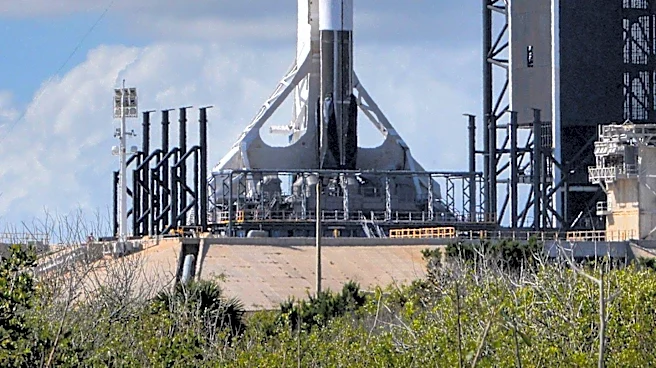
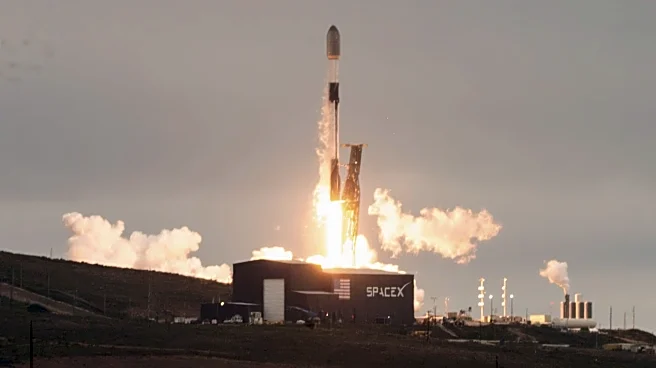
NASA's Dragonfly mission, a nuclear-powered rotorcraft designed to explore Saturn's moon Titan, is scheduled for launch in July 2028 aboard a SpaceX Falcon Heavy rocket from Kennedy Space Center's Launch Complex 39A. The mission involves a six-and-a-half-year
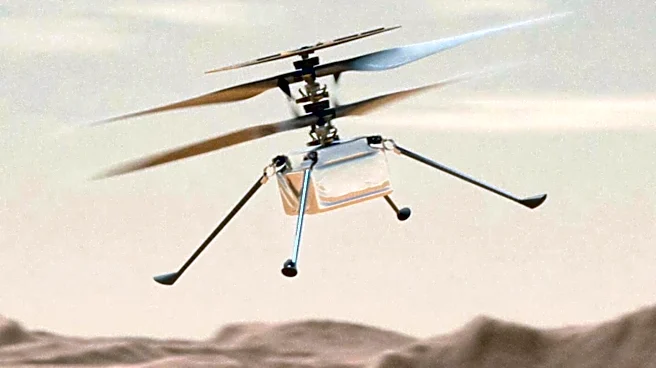
journey, with arrival at Titan anticipated in December 2034. Dragonfly will then embark on a nominal surface mission of approximately 3.3 years. The rotorcraft, weighing about 875 kilograms and featuring eight 1.35-meter coaxial rotor blades, is engineered to fly through Titan's dense atmosphere, land, collect and analyze samples, and then relocate to new sites. This capability allows for comparative analysis across various terrains, including dunes, interdunes, and crater ejecta. The mission's total cost baseline, established in 2024, is approximately $3.35 billion, reflecting previous schedule adjustments due to funding, pandemic impacts, supply-chain issues, and development challenges. Recent progress includes the completion of structural testing for the nearly 13-foot fuselage and the commencement of mechanical, thermal, and electrical integration.
Why It's Important?
The Dragonfly mission represents a significant leap in planetary science and astrobiology, offering an unprecedented opportunity to study Titan, the only moon with a substantial atmosphere and stable surface liquids. Unlike Earth, Titan's rivers and seas are composed of methane and ethane, and its surface temperature averages around minus 179 degrees Celsius, making water ice a hard bedrock. The mission's ability to traverse different locations on Titan will provide a comprehensive understanding of its complex organic chemistry and habitability, moving beyond the limitations of stationary landers. This exploration could shed light on prebiotic processes in an environment profoundly different from early Earth, offering insights into the conditions necessary for life's emergence. The use of a nuclear-powered rotorcraft in such extreme conditions pushes the boundaries of aerospace engineering and autonomous exploration, demonstrating advanced capabilities for future deep-space missions. The long duration of the mission, from launch to data return, also highlights the generational commitment required for deep-space exploration, with implications for scientific collaboration and technological development over extended periods.
What's Next?
Following the July 2028 launch, Dragonfly will undertake a six-and-a-half-year cruise phase, during which engineers will continuously monitor the spacecraft, maintain its health, and prepare for the complex landing sequence. Upon arrival in December 2034, Dragonfly will execute a direct atmospheric entry, utilizing an aeroshell, drogue parachute, and main parachute to slow its descent through Titan's thick atmosphere. Near the surface, the rotorcraft will separate from its backshell and perform a powered flight to its chosen initial landing site in the equatorial Shangri-La sand sea. The mission plan involves progressively longer sorties, with flights occurring approximately every one to two Titan days (nearly 16 Earth days each). Over its 3.3-year primary mission, Dragonfly aims to visit 20 to 30 science sites, covering a cumulative range of about 115 kilometers. A major geological destination is the Selk impact crater, which may offer evidence of past liquid water interactions with organic material. The ongoing integration and testing of the rotorcraft's components, including the Drill for Acquisition of Complex Organics (DraCO) and the Dragonfly Mass Spectrometer (DraMS), will continue in preparation for its ambitious journey.
Beyond the Headlines
The Dragonfly mission's exploration of Titan extends beyond immediate scientific discoveries, touching upon fundamental questions about the universe and our place within it. By investigating Titan's unique chemistry and geological processes, the mission contributes to a broader understanding of planetary evolution and the potential for life beyond Earth. The challenges of designing, launching, and operating a complex rotorcraft in an alien environment foster innovation in robotics, autonomous systems, and power generation, with potential spin-off technologies benefiting various industries. The mission also serves as a powerful inspiration for future generations, encouraging interest in STEM fields and demonstrating humanity's enduring drive to explore the unknown. The long-term nature of the mission, spanning over a decade from launch to the conclusion of its primary surface operations, underscores the patience and perseverance required for deep-space endeavors, fostering a global scientific community united by a common goal of discovery. The data collected by Dragonfly will not only inform our understanding of Titan but also refine models of exoplanetary systems, helping scientists identify other worlds that might harbor life.