


What's Happening?
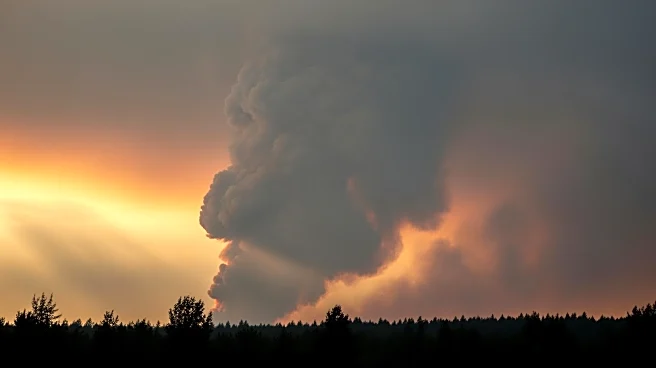
A recent study published in the journal Science Advances has identified a significant health threat posed by chronic exposure to particulate matter from wildfire smoke in the United States. The research, conducted by a team including Yaguang Wei from the Icahn
School of Medicine at Mount Sinai, found that from 2006 to 2020, an average of 24,100 deaths per year in the lower 48 states were linked to long-term exposure to fine particulates, known as PM2.5, from wildfire smoke. These particles can penetrate deep into the lungs and enter the bloodstream, exacerbating existing health conditions and leading to severe respiratory, cardiovascular, and neurological diseases. The study highlights the increasing frequency and intensity of wildfires, driven by climate change and forest mismanagement, as a growing public health concern.
Why It's Important?
The findings underscore the urgent need for effective mitigation strategies and regulatory measures to address the health impacts of wildfire smoke. The study's authors emphasize the importance of controlling PM2.5 emissions from wildfires, which are not currently regulated by the Environmental Protection Agency (EPA) as they are often considered natural disasters. The research suggests that the health impacts of wildfire smoke are more severe than those from other pollution sources, such as vehicle emissions. This highlights the critical need for policy interventions, especially in light of federal rollbacks on climate change policies that could exacerbate the frequency and severity of wildfires. The study's implications are significant for public health policy, as it calls for enhanced monitoring and regulation to protect vulnerable populations from the deadly effects of wildfire smoke.
What's Next?
The study's authors advocate for urgent action to mitigate the health risks associated with wildfire smoke. This includes implementing effective strategies to control PM2.5 emissions and enhancing EPA regulations to address this environmental hazard. The research also calls for increased scientific studies to further understand the health impacts of wildfire smoke and to develop comprehensive public health responses. As wildfires become more frequent and intense due to climate change, there is a pressing need for coordinated efforts at the federal, state, and local levels to protect public health and reduce the mortality associated with wildfire smoke exposure.
Beyond the Headlines
The study raises important ethical and policy questions about the responsibility of governments and agencies to protect public health in the face of natural disasters exacerbated by human activities. It also highlights the need for public awareness and education on the health risks of wildfire smoke, particularly for vulnerable populations such as the elderly and those with pre-existing health conditions. The research suggests that addressing the root causes of increased wildfire activity, such as climate change and forest management practices, is essential for long-term health protection. This underscores the interconnectedness of environmental policy and public health, and the need for integrated approaches to address these complex challenges.