






What's Happening?
A coalition of over a dozen mayors and town supervisors across New York State, including leaders from Kingston, Syracuse, Poughkeepsie, Rochester, and Ithaca, are urging Governor Kathy Hochul to sign the Solar Up Now York (SUNNY) Act into law. This legislation
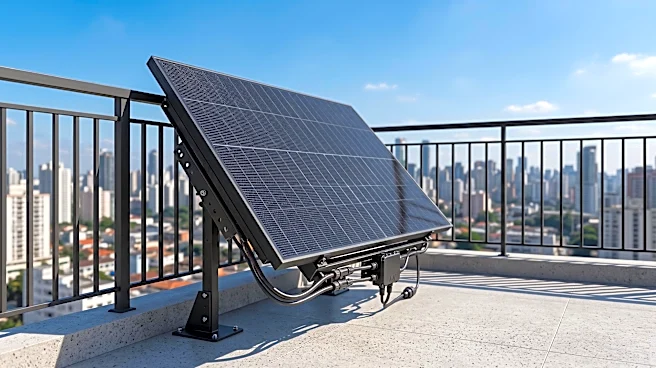
would legalize the use of small-scale, plug-in solar panels for homes and apartments, which are currently not permitted in New York. These panels could be installed on balconies, fire escapes, and porches. The SUNNY Act has already passed both the state Senate and Assembly with strong bipartisan support. In addition to the letter from local executives, members of the New York City Council, led by Council Member Chi Ossé, are scheduled to rally in support of the bill, emphasizing its potential to reduce utility bills and carbon emissions. State Senator Liz Krueger, the bill's sponsor, and City Council Speaker Julie Menin have also publicly advocated for the Governor's signature.
Why It's Important?
The SUNNY Act holds significant implications for New York residents and the state's environmental goals. Legalizing plug-in solar panels would provide a new avenue for individuals, particularly those in urban areas or apartments, to generate their own clean energy, potentially leading to reduced electricity costs and increased energy independence. This aligns New York with other states like New Jersey and Connecticut, as well as several countries, that already permit such small-scale solar setups. The widespread adoption of these panels could contribute to a reduction in the state's overall carbon emissions and lessen the strain on the existing power grid, advancing New York's climate objectives. For consumers, it represents a practical and accessible way to participate in the green energy transition.
What's Next?
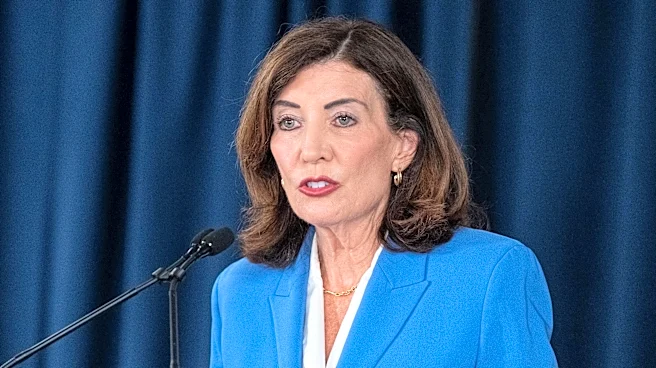
Governor Kathy Hochul currently has the SUNNY Act, along with hundreds of other bills, awaiting her action. Traditionally, the Governor does not comment on individual bills until she is prepared to make a decision. The mounting pressure from local leaders and city council members, coupled with public advocacy from the bill's sponsors, indicates a strong push for its enactment. If signed, the SUNNY Act would require the state to establish guidelines for the safe installation and use of these small-scale solar devices. If vetoed, proponents would likely need to reintroduce the legislation in a future legislative session, potentially with amendments to address any concerns raised by the Governor.
Beyond the Headlines
The debate around the SUNNY Act highlights broader themes in renewable energy policy and urban sustainability. It underscores the tension between traditional energy infrastructure and decentralized, consumer-driven energy solutions. Legalizing plug-in solar panels could democratize access to renewable energy, allowing more citizens to become active participants in energy production rather than solely consumers. This shift could also spur innovation in the small-scale solar market and create new economic opportunities. Furthermore, it reflects a growing recognition that achieving ambitious climate goals requires not only large-scale renewable projects but also empowering individuals with accessible tools for energy efficiency and generation in their own homes and communities.