




What's Happening?
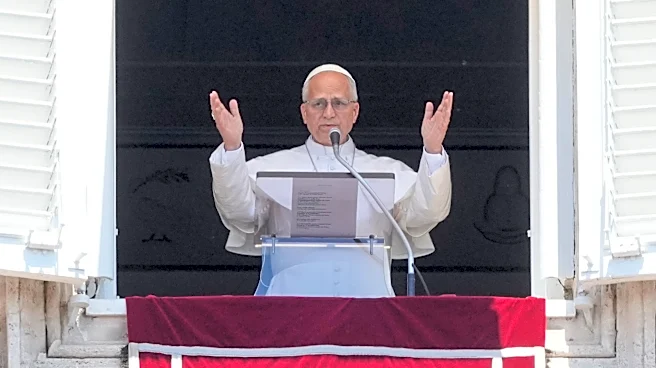
In May 2026, a claim emerged suggesting that Pope Leo XIV utilized artificial intelligence to draft his first encyclical, 'Magnifica Humanitas,' which criticizes AI and advocates for its disarmament. This claim, reported by The Verge and based on a Substack
post by AI researcher Linch Zhang, remains unverified. Zhang's analysis, using the Pangram AI detection platform, indicated that the encyclical was predominantly human-written, with 4% AI-generated and 2% AI-assisted content. Despite these findings, the Vatican has not confirmed the use of AI, and the claim remains speculative. Zhang emphasized that without explicit confirmation from the Vatican, the evidence is purely statistical and not definitive.
Why It's Important?
The implications of this claim are significant for the Catholic Church and its stance on technology. If AI was indeed used, it could challenge the authenticity and traditional processes of papal writings, potentially affecting the Church's credibility. The encyclical's message about AI's dangers could be undermined if AI contributed to its creation. This situation also highlights the broader issue of AI's role in content creation and the challenges in detecting AI-generated text, raising questions about the reliability of AI detection tools and the potential for misuse in various sectors.
What's Next?
The Vatican's response to these allegations will be crucial in determining the next steps. If the Vatican confirms AI's involvement, it may lead to a reevaluation of how AI is perceived and utilized within religious contexts. Additionally, this incident could prompt further scrutiny of AI's role in content creation across different fields, potentially leading to the development of more robust AI detection technologies and ethical guidelines for AI use.
Beyond the Headlines
This situation underscores the ethical and philosophical questions surrounding AI's integration into human activities traditionally seen as uniquely human, such as religious teachings. It raises concerns about the potential erosion of human authorship and the authenticity of spiritual guidance. The debate also reflects broader societal tensions about AI's capabilities and the need for transparency and accountability in its application.