



What's Happening?
A recent survey conducted by NBC and Telemundo, titled 'Affording America,' reveals widespread financial struggles among U.S. families, with many describing the current economic situation using words like 'depressing,' 'scary,' and 'disheartening.' The
survey found that 63% of respondents are struggling to make ends meet, and only 37% can pay their credit card bills each month. A significant 25% of those surveyed reported owing more than $10,000 on credit cards. For many, like Gilroy resident Carmen Guzmán, even with two incomes, families are not getting ahead. High gas prices are a major concern, with Guzmán spending $120 to $180 weekly on fuel for her 60-mile daily commute as an educator. This has forced her family to cut back on non-essentials, turning vacations into 'daycations' due to the inability to afford hotels or flights.
Why It's Important?
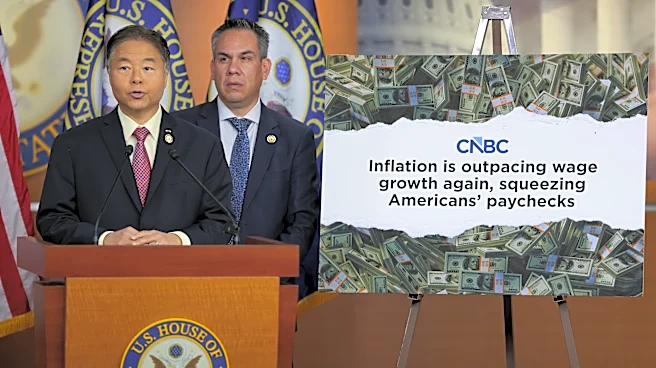
The survey highlights a significant disconnect between broader economic indicators and the lived experiences of many American households. While some economic reports may point to growth, the sentiment on the ground indicates that inflation, particularly rising gas prices, is severely impacting family budgets and quality of life. The struggle to pay credit card bills and the accumulation of debt suggest a growing financial strain on the middle class, who feel increasingly left out. This widespread financial anxiety can have broader implications for consumer spending, which is a major driver of the U.S. economy. If a large segment of the population is cutting back on discretionary spending and struggling with basic necessities, it could signal a slowdown in economic activity and increased reliance on credit, potentially leading to further financial instability for households.
What's Next?
Families like Carmen Guzmán's are looking towards future policy changes, hoping that the results of upcoming elections will lead to federal decisions that favor family finances and help control inflation. The ongoing struggle with high gas prices and the inability to save or afford leisure activities suggest that consumer behavior will likely remain cautious. If inflation persists and wages do not keep pace, more families may be forced to make further cuts to their budgets, impacting various sectors of the economy, from tourism to retail. Policymakers will face increasing pressure to address these concerns, potentially through measures aimed at reducing energy costs or providing financial relief to struggling households. The continued monitoring of consumer sentiment and spending patterns will be crucial for understanding the trajectory of the U.S. economy.
Beyond the Headlines
The survey's findings point to a deeper societal issue beyond mere economic statistics: a growing sense of disillusionment and insecurity among the middle class. The inability for two-income households to get ahead challenges the traditional American dream and can lead to broader social and political discontent. The reliance on credit cards to bridge financial gaps also raises concerns about long-term household debt and financial vulnerability. This situation could exacerbate wealth inequality, as those with fewer resources are disproportionately affected by rising costs. The emotional toll, described by respondents as 'depressing' and 'scary,' indicates a decline in overall well-being and optimism, which can have lasting effects on community stability and social cohesion. Addressing these underlying anxieties will require more than just economic adjustments; it may necessitate a re-evaluation of social safety nets and economic policies designed to support working families.