





What's Happening?
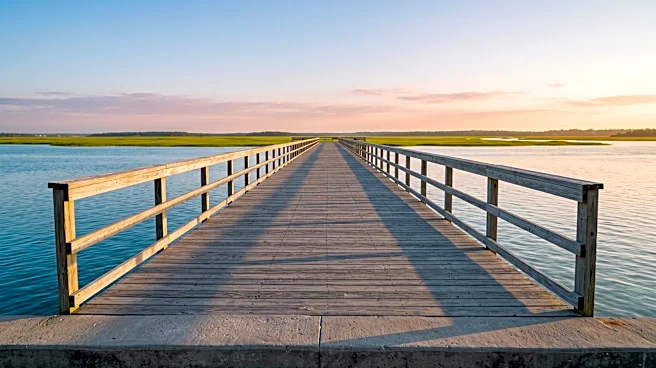
The town of Mount Pleasant, South Carolina, is proceeding with a feasibility study for the Pitt Street Bridge. This study, approved by the Town of Mount Pleasant Bids and Purchases Committee at a cost exceeding $318,000, aims to identify long-term solutions
for bridge improvements while minimizing future closures. The focus of this study encompasses parts two and three of the Pitt Street project, specifically addressing the seawalls and the fishing pier. The bridge is a significant local landmark, utilized by residents and visitors for various recreational activities such as walking, bird-watching, and crabbing. Town officials emphasize that safety is the primary concern for this project, with an additional goal to preserve and enhance the bridge in a manner that respects its historical significance. The study is expected to be completed within six months of its approval.
Why It's Important?
This feasibility study is crucial for the Mount Pleasant community as it directly impacts a beloved and frequently used public space. The Pitt Street Bridge serves as a vital recreational hub, attracting both local residents and tourists for its scenic views and diverse activities. Ensuring the structural integrity and longevity of the bridge is essential for maintaining community access and preserving its historical value. The project's emphasis on safety, as highlighted by Mike Tinkey of the Mount Pleasant Town Council, underscores the town's commitment to protecting its citizens and infrastructure, especially given the region's susceptibility to natural events like hurricanes. The study's findings will dictate future construction plans, which could affect accessibility and usage for a period, but ultimately aim to secure the bridge's future for generations to come.
What's Next?
Following the approval, the feasibility study for the Pitt Street Bridge is mandated to be completed within six months. This period will involve contractors assessing the seawalls and fishing pier to determine the most effective design for their repair and enhancement. Once the study concludes, the town will have a clearer understanding of the necessary construction work and its potential scope. While a timeline for any future bridge closures related to construction has not yet been established, the findings of this study will be instrumental in planning these phases. Stakeholders, including local residents and frequent visitors, will likely be keen to learn about the proposed solutions and the potential impact on their access to the bridge during future construction phases.
Beyond the Headlines
The preservation efforts for the Pitt Street Bridge extend beyond mere structural repairs; they touch upon the cultural and historical fabric of Mount Pleasant. The bridge's foundation includes tabby walls, an older construction technique using oysters, ashes, water, and lime for stability. Protecting this historical element, as hoped by Mike Tinkey, adds a layer of cultural preservation to the engineering challenge. The project also highlights the ongoing balance between maintaining historical structures and adapting them to modern safety standards and environmental challenges, such as hurricane resilience. The community's strong attachment to the bridge, as evidenced by long-time visitors, underscores the importance of transparent communication and community involvement throughout the planning and execution phases of this significant public works project.