
What's Happening?
Europe's efforts to decarbonize the shipping industry are facing significant challenges due to a fragile alternative fuel supply chain, according to an analysis by the NGO Transport & Environment (T&E).
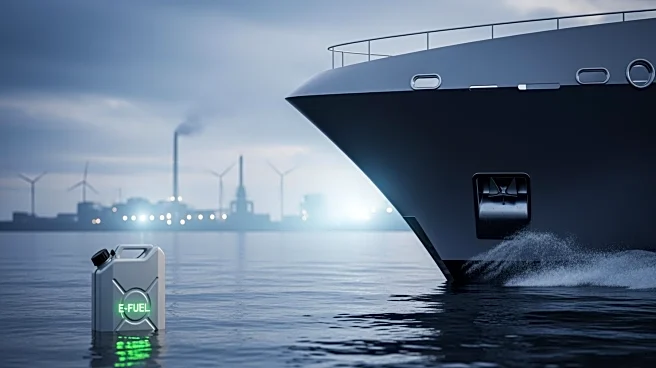
Despite Europe leading in reducing shipping emissions, the production of green hydrogen and other e-fuels remains low. The largest e-fuel plant for the maritime sector only became operational this year. T&E reviewed 80 green hydrogen and e-fuels projects, finding that less than five percent are primarily dedicated to shipping. The analysis suggests that without new policy incentives, Europe is unlikely to meet its e-fuels uptake targets set under the FuelEU agreement. The European Commission's Sustainable Transport Investment Plan (STIP) aims to accelerate the energy transition, but significant investment is needed to meet fuel targets by 2035.
Why It's Important?
The slow production of e-fuels poses a threat to Europe's decarbonization goals, particularly in the shipping sector. This shortfall could hinder Europe's ability to meet its climate targets and maintain its leadership in sustainable energy. The reliance on private sector investment, with public funding needed to de-risk projects, highlights the financial challenges in scaling up e-fuel production. The situation underscores the need for robust policy frameworks and incentives to attract investment and drive production. The success of Europe's decarbonization efforts could influence global shipping practices and set a precedent for other regions.
What's Next?
To address the production shortfall, Europe may need to implement stronger policy incentives and increase public funding to support first-of-a-kind projects. The European Commission's STIP, while a positive step, may require adjustments to effectively support the e-fuels industry. Stakeholders, including governments and private investors, will need to collaborate to ensure sufficient investment and policy support. The development of projects like the Kassø e-methanol plant in Denmark demonstrates potential, but scaling up remains a challenge. Future efforts will likely focus on increasing production capacity and aligning investments with Europe's decarbonization priorities.
Beyond the Headlines
The challenges in e-fuel production highlight broader issues in the transition to sustainable energy. The reliance on imported fossil fuels and the need for industrial leadership in e-fuels are critical considerations for Europe. The development of a strong e-fuels sector could reduce dependency on fossil fuels and enhance Europe's energy security. Additionally, the success of Europe's decarbonization efforts could influence global energy policies and encourage other regions to adopt similar strategies. The ethical and environmental implications of failing to meet decarbonization targets could have long-term impacts on global climate change efforts.