







What's Happening?
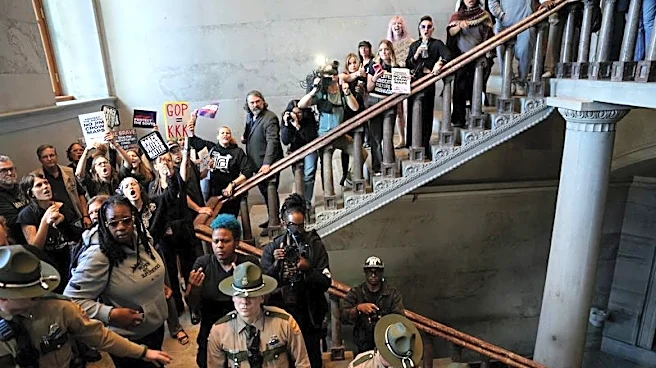
Tennessee's recent redistricting, following a Supreme Court decision that weakened the Voting Rights Act, has divided Memphis into three congressional districts likely to be Republican-held. This move is part of a broader effort by Southern states to redraw
maps favoring Republican candidates. The redistricting has sparked controversy, with critics arguing it dilutes Black representation and undermines civil rights progress. Proponents claim the new districts better reflect the state's demographics. The changes have prompted legal challenges and debates over the fairness and implications of the new boundaries.
Why It's Important?
The redistricting in Tennessee is a microcosm of a larger national issue concerning voting rights and representation. The changes could significantly impact political representation for minority communities, particularly in areas with a history of racial discrimination in voting. The redistricting may influence voter turnout and engagement, as communities grapple with the implications of the new boundaries. The situation highlights the ongoing struggle between political parties over control of congressional seats and the broader implications for democracy and fair representation in the U.S.
What's Next?
As the candidate qualifying deadline approaches, legal challenges to the new district lines are expected to continue. The outcome of these challenges could affect the final district configurations and influence future elections. Political parties and advocacy groups are likely to intensify efforts to mobilize voters and challenge perceived injustices in the redistricting process. The situation may also prompt legislative and judicial actions to address the balance between political strategy and fair representation, with potential implications for future redistricting efforts nationwide.