
What's Happening?
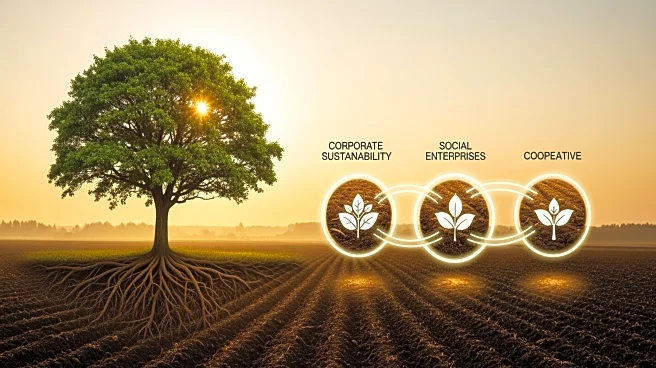
A recent study has analyzed the effects of different sustainability governance strategies on farmers' well-being, focusing on corporate sustainability programs, social enterprises, and cooperatives. The
research found that farmers involved in these programs generally reported higher well-being compared to those in conventional supply chains. However, social enterprises stood out as the only statistically significant contributor to overall well-being after accounting for sustainability certifications and other variables. Social enterprises often target specific geographical areas and farmer groups, providing tailored interventions such as emergency insurance and educational support. In contrast, corporate programs tend to be more standardized, focusing on productivity and yield, while cooperatives often depend on external funding, which can limit their service delivery.
Why It's Important?
The findings highlight the potential of social enterprises to enhance farmer well-being through personalized and context-specific interventions. This approach contrasts with the more generalized strategies of corporate programs and cooperatives, which may not address the unique needs of different regions or farmer demographics. The study suggests that social enterprises' focus on community engagement and empowerment can lead to stronger social relationships and higher satisfaction among farmers. This has implications for policy makers and organizations aiming to improve agricultural sustainability and farmer livelihoods, as it underscores the importance of adopting holistic and inclusive strategies.
What's Next?
The study's results could influence future sustainability governance strategies, encouraging a shift towards more personalized and inclusive approaches. Organizations and policymakers may consider integrating elements of social enterprise models into their programs to enhance their impact on farmer well-being. Additionally, further research could explore the applicability of these findings in different geographical contexts and with other crops, potentially leading to broader adoption of successful strategies across the agricultural sector.
Beyond the Headlines
The study also reveals demographic disparities in well-being, with older and female farmers reporting lower satisfaction levels. This suggests a need for sustainability strategies to better address the needs of these groups, who may face barriers to accessing resources and support. By tailoring interventions to account for demographic and contextual factors, organizations can ensure more equitable outcomes and contribute to reducing inequality in the agricultural sector.