


What's Happening?
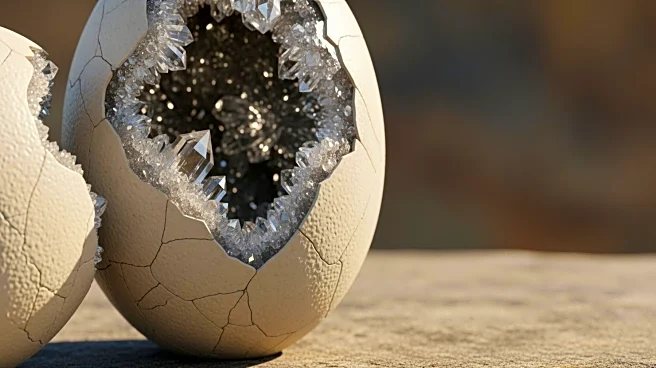
A remarkable discovery was made in a fossil bed in China where a grapefruit-sized dinosaur egg was found filled with sparkling calcite crystals, rather than a dinosaur embryo or sediment. This natural geode, identified as a new oospecies named Shixingoolithus
qianshanensis, was discovered in the Upper Cretaceous Chishan Formation of the Qianshan Basin. This region is more commonly known for its Paleocene turtles, mammals, and birds. The egg, one of two found, has not been linked to a specific dinosaur species due to the absence of an embryo. However, the microstructure of the shell aligns more closely with dinosaur eggs than those of other animals, leading researchers to classify it as a dinosaur egg. The calcite crystals provide unique insights into the environmental conditions of the fossil's original nest.
Why It's Important?
This discovery is significant as it provides paleontologists with a rare opportunity to study the environmental conditions of the past. The formation of calcite crystals inside the egg suggests that after the embryo decayed, groundwater seeped into the shell, depositing minerals that formed the crystals. This process not only preserves the egg but also offers clues about the geochemical environment of the time. Such findings can enhance our understanding of the conditions under which these ancient creatures lived and how their remains were preserved. Additionally, the identification of a new oospecies adds to the diversity of known dinosaur eggs, contributing to the broader knowledge of dinosaur reproduction and development.
What's Next?
Future research may focus on further analyzing the calcite crystals to extract more detailed information about the geochemical conditions of the fossil bed. This could involve using advanced dating techniques to determine the age of the egg more precisely. Additionally, paleontologists may continue to search the Chishan Formation for more specimens, which could potentially link the Shixingoolithus qianshanensis eggs to a specific dinosaur species. Such discoveries could provide further insights into the reproductive habits and environmental adaptations of dinosaurs from this era.
Beyond the Headlines
The discovery of crystal-filled dinosaur eggs highlights the intricate processes of fossilization and the diverse ways in which ancient life is preserved. This finding underscores the importance of interdisciplinary research, combining paleontology with geology and chemistry, to unravel the history of life on Earth. It also raises questions about the potential for similar discoveries in other fossil-rich regions, which could further expand our understanding of prehistoric ecosystems and the evolutionary history of dinosaurs.