





What's Happening?
A Swiss man, identified as Bernhard Sutter, the managing director of the Swiss assisted dying company Exit, died after losing consciousness while hiking Mount Fuji. This incident marks the second fatality on the mountain within a week. Sutter was on a family
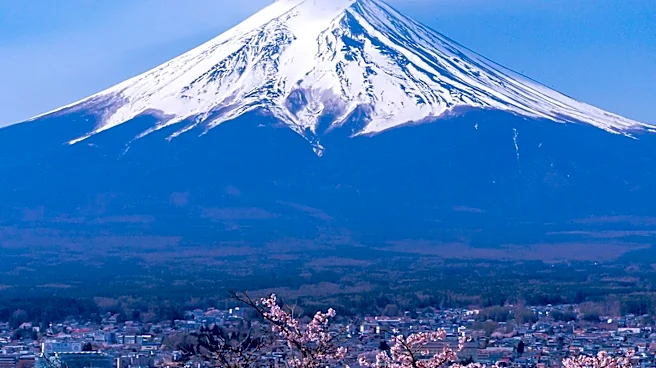
vacation in Japan when he experienced a medical emergency during the hike. Despite being resuscitated and taken to a hospital, he was pronounced dead upon arrival. In a separate incident, a 99-year-old woman named Tome Sagawa was rescued after injuring herself on the mountain and spending the night in a hut. Mount Fuji, Japan's highest mountain, has become a popular hiking destination, leading to increased safety concerns due to overcrowding and unprepared climbers.
Why It's Important?
The incidents on Mount Fuji highlight the growing safety concerns associated with the mountain's popularity as a hiking destination. The increase in tourism has led to overcrowding and a rise in safety incidents, prompting local authorities to implement stricter access rules. These measures include daily caps on climbers and increased climbing fees. The fatalities underscore the need for hikers to be adequately prepared and aware of the physical demands and potential dangers of the climb. The situation also raises questions about the balance between promoting tourism and ensuring the safety of visitors.
What's Next?
In response to the safety concerns, authorities may continue to enforce and possibly tighten regulations on Mount Fuji's hiking trails. This could include further limiting the number of climbers allowed per day and increasing fees to manage the influx of tourists. Additionally, there may be increased efforts to educate climbers on the necessary preparations and risks associated with hiking Mount Fuji. The incidents could also prompt discussions on how to better manage popular tourist destinations to prevent similar occurrences in the future.
Beyond the Headlines
The tragic events on Mount Fuji may lead to broader discussions about the ethical responsibilities of tourism operators and local governments in ensuring visitor safety. There is also a cultural dimension, as Mount Fuji holds significant spiritual and historical importance in Japan, which may influence how the site is managed and preserved. The balance between maintaining the mountain's natural beauty and accommodating tourists will likely be a continuing challenge for Japanese authorities.